
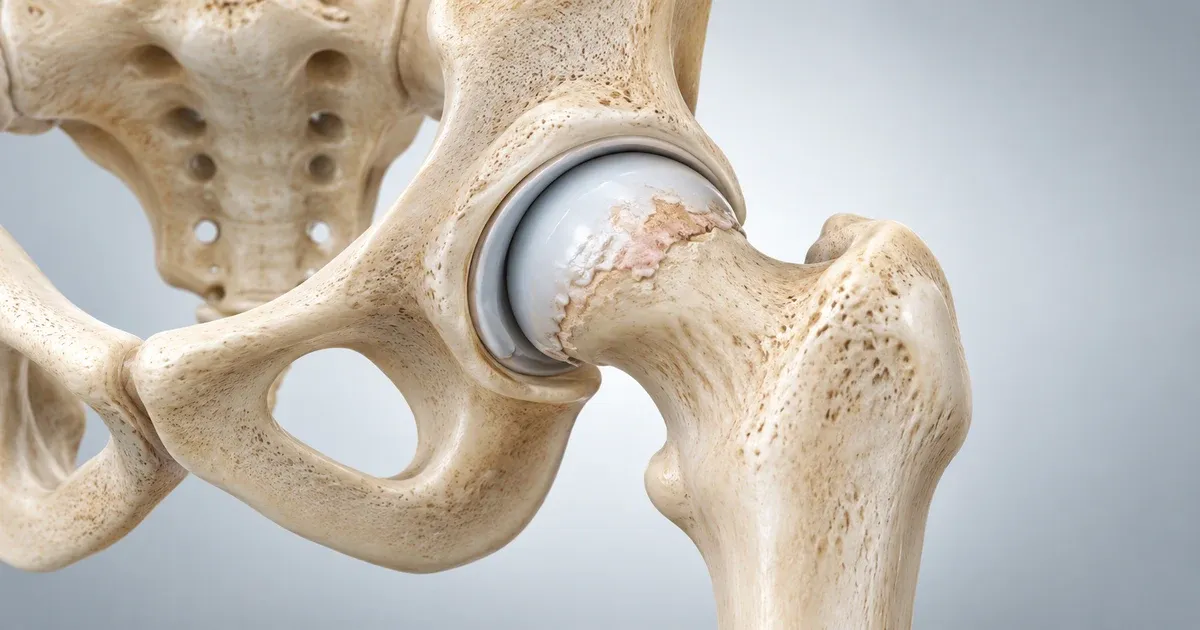
Hip arthritis may gradually make it harder to walk, put on shoes, sleep comfortably, or take part in activities that matter to you. A diagnosis of arthritis does not automatically mean you need surgery. A hip replacement discussion may be appropriate when pain and loss of function remain significant despite reasonable nonsurgical care, and when the possible benefits and risks fit your goals. [1, 2]
What hip arthritis can feel like
Osteoarthritis involves changes to the joint cartilage and nearby structures. Hip symptoms often include pain in the groin or thigh, stiffness, and reduced motion, though pain can also be felt in the buttock or around the knee. Symptoms may affect walking, stairs, getting in and out of a chair, or putting on socks and shoes. Other conditions can cause similar symptoms, so an examination helps identify the source. [1, 3]
The degree of discomfort does not always match what an image looks like. A clinician considers your symptoms, examination, health, and imaging together. An X-ray may help assess the joint, but the decision about treatment should also account for how your hip affects daily life and what you want to be able to do.
When a surgical discussion may make sense
A hip replacement conversation may be worth having when pain is persistent or worsening, limits activities or sleep, and has not improved enough with nonsurgical measures. It is also reasonable to ask about options if you are increasingly limiting your walking or relying on help for daily tasks. There is no single pain score, X-ray finding, or age that determines the right time for everyone. [1, 2]
The decision is shared. Some people prefer to continue nonsurgical care while symptoms are manageable; others consider surgery when limitations outweigh their concerns about an operation and recovery. A consultation does not commit you to surgery. It can help clarify the diagnosis, alternatives, likely tradeoffs, and whether more evaluation is needed. [2]
What to try or review before deciding
Depending on the diagnosis and your health, nonsurgical care may include adapting activities, guided exercise or physical therapy, using a cane or other support, or medication recommended by a clinician. Some people may discuss injections. These approaches may reduce symptoms or support function, but they do not work the same way for everyone. Ask which options are reasonable for you and what improvement would count as meaningful. [1, 3]
Do not start or stop a medication based only on general online advice. Tell your clinician about other conditions, medicines, prior treatments, and any history of hip surgery or injury. If you have not had imaging, ask whether X-rays are appropriate to evaluate the joint. Wiki Wiki Orthopedics offers hip evaluations and X-rays and advanced imaging.
What a hip replacement evaluation involves
An orthopedic evaluation typically explores where the pain is, how long it has been present, what makes it better or worse, and how it affects sleep, mobility, work, and other priorities. The exam may assess hip motion, strength, gait, and tenderness. Imaging, often X-rays, may help show joint changes and rule in or out other concerns. A clinician may also consider whether the symptoms could come from the back, knee, or another source. [1]
If replacement is one option, ask what the operation is intended to improve in your specific case, what limitations may remain, what risks matter given your health, and what recovery could involve. Ask about alternatives and what could happen if you wait. A clear discussion should address uncertainty and should not promise a particular outcome. [2]
Wiki Wiki Orthopedics provides orthopedic care in Honolulu. Learn more about the practice's surgical services and request an evaluation to discuss persistent hip symptoms. Treatment recommendations depend on individual findings and goals.
Urgent symptoms need a different response
Longstanding hip arthritis is usually discussed in a scheduled evaluation, but sudden severe hip pain after a fall, inability to bear weight, a visible deformity, or a leg that becomes cold, pale, or numb needs urgent assessment. Call 911 for a serious injury, severe bleeding, collapse, or another life-threatening emergency. Do not try to force a deformed joint into place.
Preparing for the conversation
Before a visit, write down which activities have become difficult, how symptoms affect sleep and walking, what treatments you have tried, and what outcomes matter most to you. Bring medication information and any prior X-rays or reports. You can ask: What is the most likely source of my symptoms? What nonsurgical options remain? What would make surgery more or less appropriate for me? What should I expect if I choose to wait?
Hip replacement is a personal decision based on symptoms, examination, health, and preferences—not simply an X-ray result or a label of arthritis. A careful discussion can help you choose a next step that fits your situation.
Sources
- Hip Osteoarthritis, American Academy of Orthopaedic Surgeons, accessed 2026.
- Deciding to have knee or hip replacement, MedlinePlus, accessed 2026.
- Osteoarthritis, National Institute of Arthritis and Musculoskeletal and Skin Diseases, accessed 2026.
For non-emergency hip pain on Oahu, request an appointment or call (808) 439-6201.
