
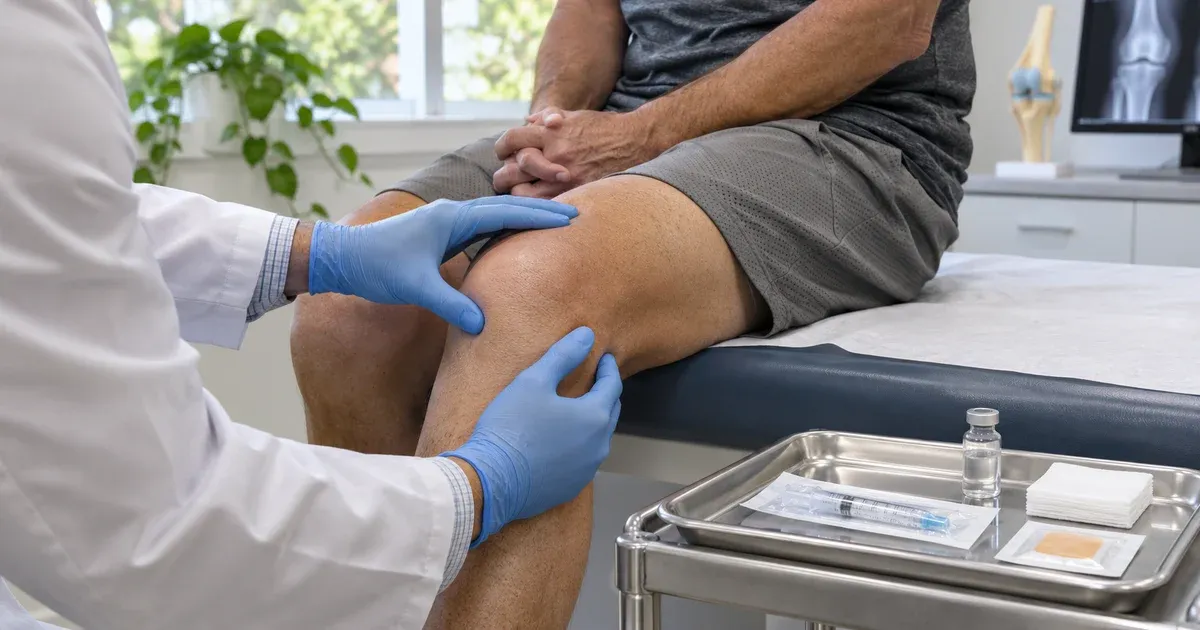
An injection may be one part of a knee-arthritis plan, but “a knee shot” can mean several different treatments. They do not have the same ingredients, goals, evidence, or risks. Before choosing one, it helps to confirm what is causing the pain, understand what the injection is expected to do, and compare it with exercise, physical therapy, medication, bracing, and other reasonable options. [1, 2]
Start with the diagnosis
Knee osteoarthritis involves changes in the joint cartilage and nearby bone. It can cause pain, stiffness, swelling, reduced motion, and difficulty with walking or stairs. Those symptoms are not specific to arthritis. A meniscus injury, tendon problem, ligament injury, gout, infection, or pain referred from another area can feel similar. [1]
An evaluation usually begins with the history and physical examination. A clinician may assess where the knee hurts, whether it is swollen or warm, how it moves, how stable it feels, and how symptoms affect daily life. Weight-bearing X-rays can help show joint-space loss and bone changes. Other tests are considered when the history or examination suggests a different problem. [1, 3]
That step matters because an injection chosen for osteoarthritis may not address a different diagnosis. It also helps identify situations in which injecting the joint should wait while a possible infection or acute injury is evaluated.
Corticosteroid injections
A corticosteroid injection places an anti-inflammatory medicine inside the joint. For some people with symptomatic knee osteoarthritis, it may provide short-term relief. The response varies, and temporary improvement does not repair lost cartilage or prove that future injections will work the same way. The AAOS guideline supports intra-articular corticosteroids for short-term relief while emphasizing that treatment should be individualized. [2]
Ask what medicine will be used, what side effects and precautions apply to you, how soon benefit might be assessed, and how the injection fits with rehabilitation or other care. Your clinician should know about diabetes, blood-thinning medication, allergies, recent illness, skin problems near the knee, prior injections, and any planned surgery. The appropriate timing and number of injections depend on the patient and the treatment plan rather than a universal schedule.
Hyaluronic acid injections
Hyaluronic acid injections are sometimes called viscosupplementation or “gel” injections. They are intended to supplement a component of joint fluid. Recommendations differ because studies have not shown a consistent, clinically meaningful benefit for everyone. The 2021 AAOS knee-osteoarthritis guideline does not recommend hyaluronic acid injections for routine use, while the National Institute of Arthritis and Musculoskeletal and Skin Diseases notes that they are sometimes considered for knee osteoarthritis. [2, 3]
This does not allow an article to decide whether a particular person should or should not receive one. It means the evidence limits should be part of the conversation. Ask why this option is being considered in your case, what outcome would count as useful, what alternatives exist, and what the next step would be if it does not help.
PRP and other biologic injections
Platelet-rich plasma, or PRP, is prepared from a patient’s blood to concentrate platelets before injection. Research on PRP for knee osteoarthritis continues to develop. The AAOS guideline describes evidence of possible benefit as limited, which means results and study methods are not consistent enough to treat it as a predictable solution for every patient. [2]
Bone marrow aspirate concentrate, sometimes shortened to BMAC, is another procedure discussed in orthopedics. It should not be described as a proven way to regrow an arthritic knee. The FDA warns that regenerative-medicine products marketed for orthopedic conditions may be unapproved and that claims about safety or effectiveness require careful scrutiny. Patients should ask exactly what product is proposed, how it is prepared, what evidence supports its use for their diagnosis, what regulatory status applies, and what risks and alternatives should be considered. [4]
No injection should be presented as a guaranteed cure, a replacement for a complete evaluation, or a certain way to avoid surgery. The decision should reflect the diagnosis, arthritis pattern, health history, goals, prior treatment, and willingness to take part in the rest of the care plan.
Injections are usually one part of care
Exercise and strengthening are central parts of osteoarthritis management. A physical therapist or clinician can help adapt activity and build a program around symptoms, strength, balance, and mobility. Depending on the person, a plan may also include weight management, a brace or support, topical or oral medication when medically appropriate, and changes to activities that repeatedly trigger pain. [2, 3]
An injection may create a period of symptom relief that makes exercise or daily activity more manageable, but it does not replace those measures. Before the procedure, ask how improvement will be measured and when the plan will be reviewed. Useful measures may include walking tolerance, sleep, stairs, motion, or another activity that matters to you—not just a pain score on one day.
Wiki Wiki Orthopedics describes knee care, arthritis and joint-pain care, and the injections offered by the practice. The practice also offers on-site X-rays and referrals for advanced imaging when further evaluation is appropriate. A visit can help distinguish arthritis from other causes of knee pain and clarify which options fit the findings.
When a swollen knee needs urgent care
Seek prompt medical care for a knee that becomes very hot, red, rapidly swollen, or severely painful, especially with fever or feeling ill. New inability to bear weight after an injury, an obvious deformity, or a cold, pale, numb foot also needs urgent assessment. Call 911 or go to an emergency department for a serious injury or other life-threatening symptoms.
For a routine arthritis flare, avoid assuming that every episode needs an injection. Note when the symptoms began, what changed, whether there was an injury, and what has helped or worsened the pain. Bring a medication list and details of prior injections or imaging to the visit.
Questions to ask before an injection
- What diagnosis are we treating, and what findings support it?
- What is in the injection, and what is it expected to do?
- How strong is the evidence for someone with my condition?
- What risks or precautions apply to my health and medications?
- How will we judge whether it helped, and what happens next?
- What exercise, therapy, or other care should continue alongside it?
These questions turn an injection from an isolated procedure into a shared decision with a clear purpose and follow-up plan.
Sources
- Arthritis of the Knee, American Academy of Orthopaedic Surgeons, OrthoInfo, accessed 2026.
- Management of Osteoarthritis of the Knee (Non-Arthroplasty), Third Edition, American Academy of Orthopaedic Surgeons, 2021.
- Osteoarthritis: Diagnosis, Treatment, and Steps to Take, National Institute of Arthritis and Musculoskeletal and Skin Diseases, accessed 2026.
- Important Patient and Consumer Information About Regenerative Medicine Therapies, U.S. Food and Drug Administration, 2021.
For knee arthritis symptoms on Oahu, request an appointment or call (808) 439-6201.
