
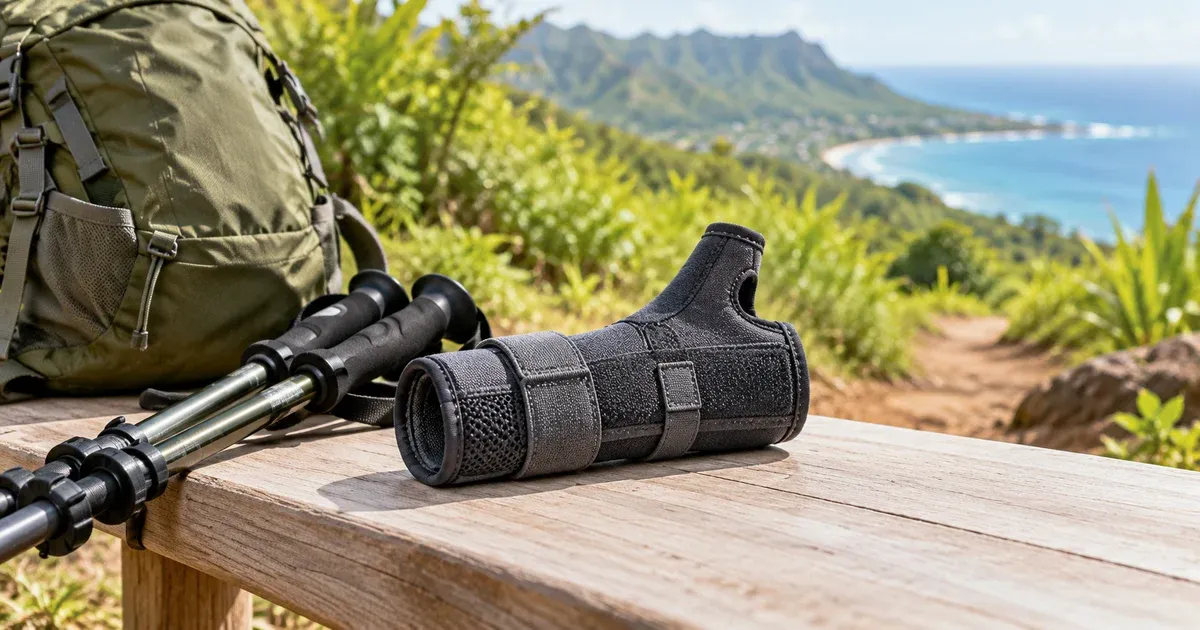
Wrist pain after a fall deserves attention even when the first X-ray looks normal. Some fractures are difficult to see immediately, and a wrist ligament injury can also need treatment. For people on Oahu, understanding the follow-up plan can help protect an injured wrist while the diagnosis becomes clearer.
Why the thumb side of the wrist matters
The scaphoid is a small wrist bone near the base of the thumb. Landing on an outstretched hand can break it. Pain may be most noticeable in the hollow on the back of the wrist below the thumb, especially with gripping, pinching, or pushing. Swelling can occur, but the wrist may not look obviously broken. Being able to move it does not reliably settle the question. [1]
A sprain involves the ligaments that connect bones. Sprains range from stretched fibers to complete tears, and their symptoms can overlap with a fracture. Calling an injury a sprain without an appropriate examination and follow-up can leave important questions unanswered. Persistent pain, weakness, or a sense that the wrist is unstable should be discussed with a clinician. [3]
A normal first X-ray is a starting point
X-rays are generally the first imaging test after a wrist injury. When the examination still raises concern despite negative or uncertain images, further evaluation may be appropriate. Options include repeat X-rays after about two weeks, MRI without contrast, or CT without contrast. These are alternatives selected for the clinical situation, rather than a checklist everyone needs to complete. [2]
An orthopedic review of acute scaphoid injuries recommends early MRI, or CT as an alternative, when a scaphoid fracture is suspected despite negative initial X-rays. It also describes CT's role in assessing fracture alignment and healing. This supports asking about an early imaging plan rather than assuming that every suspected fracture must wait for another plain X-ray. [4]
Ask what injury remains possible, how the wrist should be protected, and when the next assessment should occur. If repeat imaging is the plan, confirm the date before leaving. Do not interpret a planned interval between scans as permission to return to strenuous activity.
When to seek urgent evaluation or emergency care
Arrange prompt assessment for persistent pain after a fall, particularly pain near the thumb or difficulty using the hand. Scaphoid pain that continues beyond the first day warrants medical attention. [1] Wiki Wiki Orthopedics evaluates hand and wrist conditions, with on-site X-rays and referrals for advanced imaging when needed.
Go to the emergency room immediately for a visibly deformed wrist, a wound with exposed bone, or fingers that become cold, pale, blue, or persistently numb. Severe bleeding, loss of consciousness, or suspected head, neck, or back injury after a significant fall calls for emergency help: call 911. Do not try to straighten an injured wrist or push exposed bone back into place. [5]
An earlier reassuring X-ray does not cancel new warning signs. If symptoms change while you are waiting for a follow-up appointment, seek reassessment rather than waiting for that date.
Protect the wrist while the diagnosis is clarified
If a clinician suspects a scaphoid fracture, a splint or cast may be recommended even before it appears on an X-ray. Wear the prescribed support and avoid activities that could reinjure the wrist. Some injuries need a support that includes the thumb; the clinician should select the appropriate type. [1]
For symptom relief, stop activities that cause pain. A cold pack wrapped in cloth can be used for about 20 minutes at a time. Ask which pain medicine is suitable for you, especially if you have kidney or heart disease, a history of stomach bleeding, or take other medicines. Follow the label and your clinician's directions. [3]
Tell the treating clinician what your day involves: lifting at work, handling tools, carrying equipment, or supporting your weight through your hands. Ask for clear restrictions that fit those tasks. Bring any previous images, reports, and discharge instructions to the next visit so the team can review what has already been assessed.
Recovery depends on the diagnosis
There is no single recovery timetable for every painful wrist. Scaphoid treatment depends on where the break lies and whether the fragments have shifted. Some fractures can be treated with immobilization; others need surgery. Healing assessment, rather than symptoms alone, helps guide the next step. [4]
Even when a fracture has been excluded, a significant ligament injury may need specialist assessment. Rehabilitation and exercise advice should follow the diagnosis; a generic wrist-strengthening routine is not a substitute for establishing what was injured. Report pain or swelling that increases, new tingling, or recovery that is not progressing as expected. [3]
Before resuming work or sport, ask whether you need another examination or imaging, what activities are permitted, and what symptoms should bring you back sooner. A clear plan is more useful than guessing from how the wrist feels on one good day.
Sources
- Scaphoid fracture of the wrist, American Academy of Orthopaedic Surgeons, accessed 2026.
- Acute hand and wrist trauma, American College of Radiology and Radiological Society of North America, reviewed 2021.
- Wrist sprain: aftercare, MedlinePlus, reviewed 2026.
- Acute scaphoid fractures: guidelines for diagnosis and treatment, Clementson and colleagues, EFORT Open Reviews, 2020.
- Broken bone, MedlinePlus, accessed 2026.
For a non-emergency wrist injury on Oahu, request an appointment with Wiki Wiki Orthopedics or call (808) 439-6201. This article provides general education; an examination is needed for advice about your injury.


