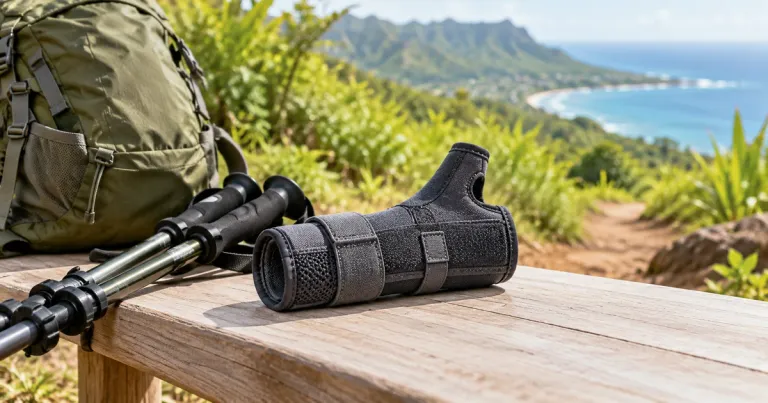
A sudden pop behind the ankle during sport or a quick push-off can signal an Achilles tendon tear. New weakness or difficulty pushing off deserves prompt assessment. For active people on Oahu, protecting the injury comes before returning to the court or trail. [1]
Recognize a possible tendon injury
The Achilles tendon joins the calf muscles to the heel bone and helps you push off. A rupture means some or all of its fibers have torn, sometimes during a jump, sudden acceleration, change of direction, or trip. [1]
Symptoms can include pain, bruising, swelling, and reduced push-off strength. Some people feel as if they were struck from behind. A pop is a clue, but diagnosis requires an examination. Describe any difficulty climbing stairs or change in walking. [1]
This is different from assuming every sore heel is a rupture. The practical question is whether a sudden event caused a new loss of function. Explain that sequence clearly when arranging care: what you were doing, what you felt, and what changed immediately afterward.
Seek care promptly and recognize emergencies
If a sudden pop is followed by weakness or trouble using the leg, seek prompt in-person evaluation rather than finishing the game or trying a stretching routine. If an orthopedic clinic cannot assess you promptly, use an urgent care or emergency department. Wiki Wiki Orthopedics evaluates foot and ankle injuries, including Achilles injuries.
Go to the emergency room immediately for a markedly deformed ankle, a deep open injury, exposed bone, or a foot that is cold, pale, blue, or numb. Severe bleeding, collapse, or a serious head, neck, or back injury after a fall calls for emergency help: call 911. Do not try to straighten a deformed ankle or push exposed tissue back into a wound. [5]
These warning signs take priority over an appointment request. When asking someone to help you reach care, mention any other injuries from the same incident, not only the ankle pain.
What the assessment may involve
The clinician will ask about the injury, earlier tendon symptoms, medical conditions, and medications. Examination may include checking the tendon and assessing how the foot responds when the calf is squeezed, called the Thompson test. Leave these tests to the clinician rather than repeatedly testing the injured leg yourself. [2]
Ultrasound or MRI can help assess a suspected tear when needed. X-rays may identify an associated bone injury, particularly when the tendon pulls away a fragment at its attachment. The choice of imaging depends on the findings; an MRI is not automatically the first step for everyone. [2]
Our X-rays and advanced imaging page explains the clinic's on-site X-rays and referrals for CT or MRI. Bring previous images or reports if another facility has already assessed the injury, along with your medication list and discharge instructions.
Protect the tendon while awaiting a plan
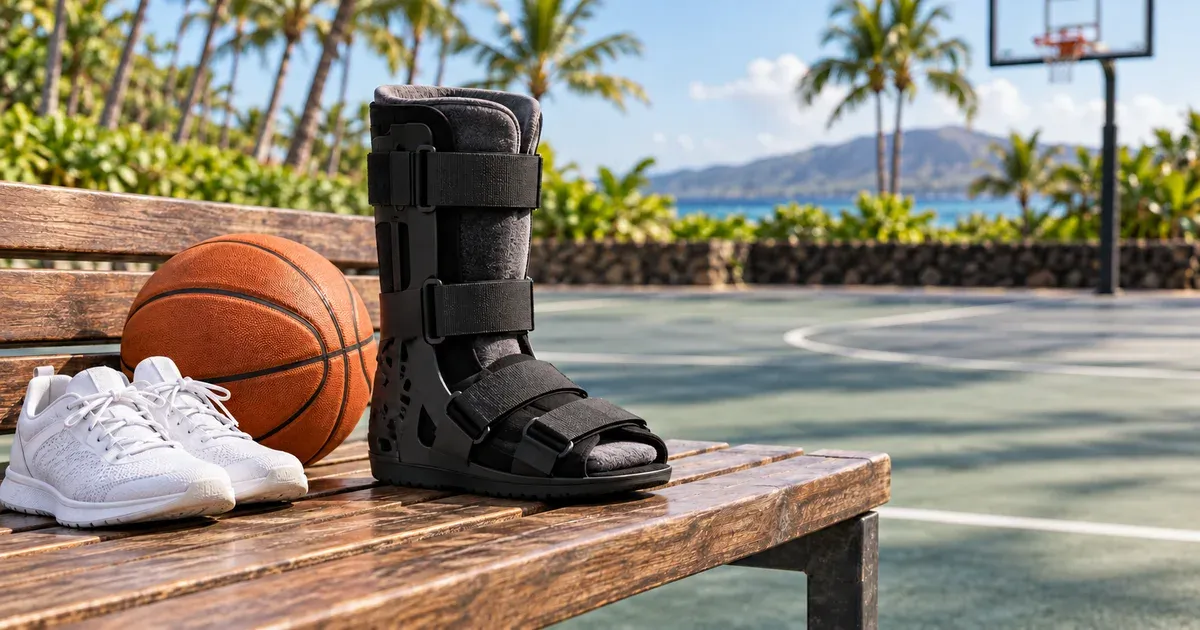
Stop running, jumping, and playing sport. Do not try to loosen a suspected tear with calf stretching, heel drops, or ankle exercises. Early protection and later rehabilitation serve different purposes. A clinician may prescribe a boot or splint that holds the ankle in a protected position; follow the specific instructions about walking, crutches, and wearing the support. [3]
If a boot has heel wedges or an adjustable ankle position, do not remove wedges or change the setting yourself. Ask what to do for washing, sleeping, stairs, and skin checks. Report rubbing, redness, or a pressure sore, especially if you have diabetes or reduced sensation. Instructions from another person's treatment plan may not fit your injury. [3]
Surgery is a decision, not an automatic next step
Both nonoperative treatment and surgical repair can be considered for an acute Achilles rupture. In a randomized trial published in 2022, patient-reported outcomes at one year were similar across nonoperative treatment, open repair, and minimally invasive surgery. Repeat ruptures were more frequent in the nonoperative group, while nerve injuries occurred more often in the surgical groups. These findings describe tradeoffs, not a promise about an individual's result. [4]
Ask the treating surgeon how those tradeoffs apply to your injury, work, sport, and recovery support. Useful questions include what each option requires, which risks matter most in your situation, and how follow-up and rehabilitation will be organized.
Plan beyond the first visit
Recovery progresses from protection to permitted movement and strengthening. Ask when to start each stage and return to sport. Increasing pain, swelling, fever, or a concerning change in the foot should prompt contact with the clinician. [1]
Before leaving, confirm the next appointment and any imaging arrangements. Ask for written walking and work restrictions, and clarify whom to contact if the boot becomes uncomfortable or symptoms change. If work involves ladders, lifting, driving, or uneven ground, describe those tasks so the plan addresses your actual day.
Sources
- Achilles tendon rupture: aftercare, MedlinePlus, reviewed 2026.
- Achilles tendon rupture (tear), American Academy of Orthopaedic Surgeons, accessed 2026.
- Suspected Achilles tendon injury, Royal Free London NHS Foundation Trust, approved 2026.
- Nonoperative or surgical treatment of acute Achilles' tendon rupture, Myhrvold and colleagues, New England Journal of Medicine, 2022.
- Broken bone, MedlinePlus, reviewed 2026.
For a non-emergency ankle injury on Oahu, request an appointment with Wiki Wiki Orthopedics or call (808) 439-6201. An examination is needed to determine the cause and appropriate treatment.