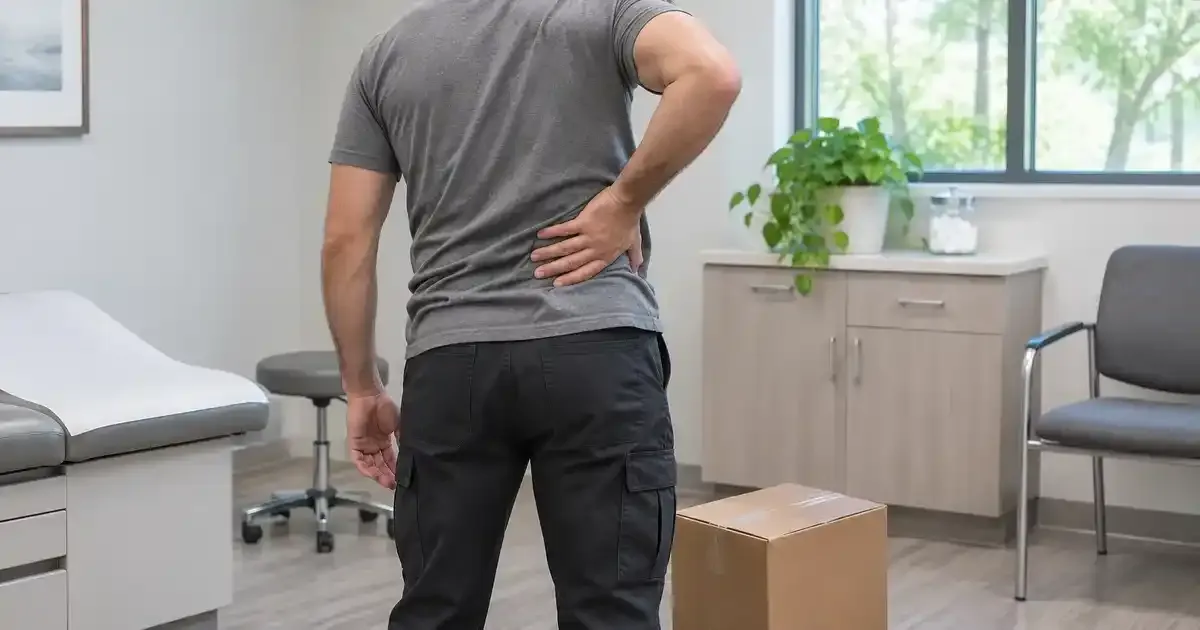
A sore lower back after lifting a box, doing yard work, or twisting while carrying something can be unsettling. Often, the pain comes from a strain or irritation of the muscles and supporting tissues around the spine. But back pain can have several causes, and the pattern of symptoms matters. A new pain that limits walking, keeps returning, or comes with leg symptoms is worth taking seriously.
What a lifting-related back injury can feel like
A strain often causes pain that stays in the low back and becomes more noticeable with certain movements, such as bending, getting out of a chair, or turning in bed. The muscles may feel tight or guarded. Symptoms can begin right away or become more obvious later that day.
Pain that travels into the buttock or down one leg can occur when a spinal nerve is irritated. Tingling, numbness, or weakness should not be ignored. These symptoms do not automatically mean a serious injury, but they help guide the examination and whether imaging or other testing may be useful.
It is also possible to have back pain after lifting without a single obvious moment of injury. Repeated lifting, a sudden change in activity, or awkward body position can all add stress to the back. A clinician will consider how the pain began, where it travels, and what movements make it better or worse.
When to seek emergency help
Call 911 or go to the emergency department for back pain after a major accident or when there are signs of a possible serious spine injury. Urgent emergency symptoms include new loss of bladder or bowel control, numbness around the groin or inner thighs, rapidly worsening leg weakness, inability to walk safely, or a visible deformity after trauma.
Back pain accompanied by severe chest pain, trouble breathing, fainting, confusion, or symptoms of stroke also needs emergency care. These symptoms may point to a problem beyond the back itself.
A painful back after a smaller lift can still need prompt medical attention. Contact a clinician quickly if there is fever, unexplained weight loss, pain that repeatedly wakes you at night, new weakness, or numbness that is spreading. People who have had cancer, use medicines that affect bone strength, or have a recent significant fall should mention that history during an evaluation.
What happens at an orthopedic evaluation
At a spine evaluation, the clinician asks about the activity that triggered the pain, prior episodes, work and sport demands, and any symptoms in the legs. The examination may include checking posture, movement, tenderness, strength, sensation, reflexes, and how comfortably you can walk.
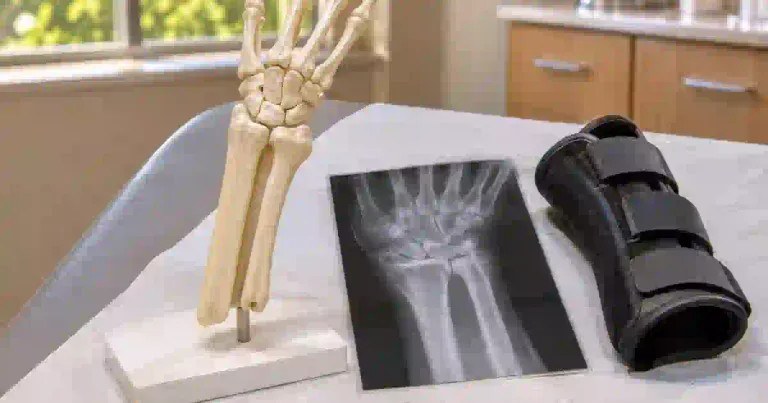
Not everyone with a new back strain needs imaging immediately. When an X-ray is appropriate, it can help assess bone alignment and look for a fracture or other structural change. Learn more about X-rays and advanced imaging. Depending on the history and exam, other studies such as MRI may be considered when a nerve-related problem or a different cause needs clarification.
The goal is not simply to attach a label to the pain. It is to look for problems that need urgent treatment, protect the back during the painful phase, and make a plan that fits the likely cause and the activities you need to return to.
What to do while arranging care
Avoid another heavy lift, sudden twist, or activity that clearly worsens the pain. Short periods of gentle movement are often more practical than staying in bed for a long time. Change positions regularly and use care getting in and out of a car or chair.
A cold pack or heat may feel helpful for some people. Keep a barrier between the pack and the skin, use brief sessions, and stop if it makes symptoms worse. Over-the-counter medicines may not be safe for everyone, particularly people with kidney disease, ulcers, blood-thinning medicines, pregnancy, or medication allergies. A pharmacist or clinician can help you decide what is appropriate for you.
Do not try to “push through” new leg weakness, numbness, or a loss of balance. Avoid having someone forcefully manipulate a painful back after a new injury until it has been evaluated.
Returning to work, exercise, and lifting
Recovery is different for each cause of back pain. Your return to exercise, paddling, gym training, construction work, or other lifting should be based on your symptoms and the guidance from your clinician. When you are ready to lift again, plan the movement before you start: keep the load close, avoid twisting under load, and ask for help or use equipment when an item is awkward.
Pain that improves and then flares again with the same activity is useful information. Bring a short note of what you lifted, which motions triggered symptoms, and whether pain moved into the leg. That can make the next evaluation more useful.
If new back pain after lifting is making daily activities difficult, request an appointment with Wiki Wiki Orthopedics on Oʻahu or call (808) 439-6201.
Sources
- Low Back Pain, American Academy of Orthopaedic Surgeons
- Low Back Pain - Acute, MedlinePlus Medical Encyclopedia
- When to Use the Emergency Room - Adult, MedlinePlus Medical Encyclopedia
- Herniated Disk, MedlinePlus Medical Encyclopedia