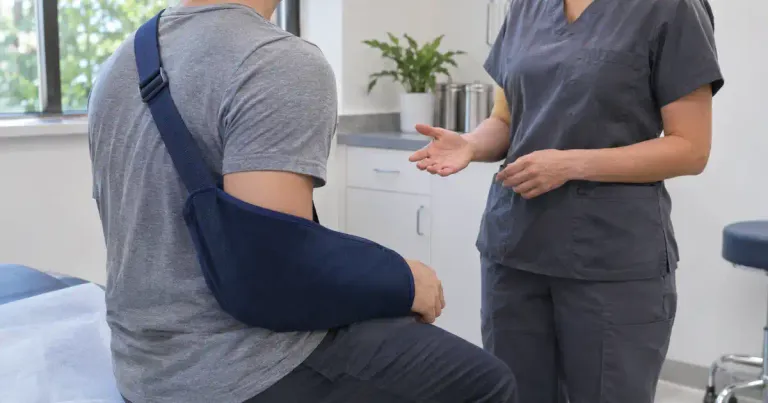
A hard fall onto the shoulder, a bicycle crash, a surf injury, or a collision during sports can leave the collarbone area sore and swollen. Sometimes it is a bruise or muscle injury. Sometimes it is a clavicle fracture, often called a broken collarbone. Because the symptoms can overlap, pain or a new bump over the collarbone after trauma deserves a timely exam and usually an X-ray.
For a stable injury without emergency warning signs, orthopedic urgent care can often evaluate a suspected collarbone fracture the same day. If there is trouble breathing, an open wound, circulation changes in the hand, or major trauma, go to an emergency department or call 911 instead.
Why the collarbone can break in a fall
The clavicle is the long, shallowly curved bone between the breastbone and shoulder. It helps connect the arm to the body and sits just under the skin, so swelling or a change in its contour can be noticeable after an injury. A direct blow to the shoulder or a fall onto an outstretched arm can transfer force through the shoulder area and injure the clavicle.
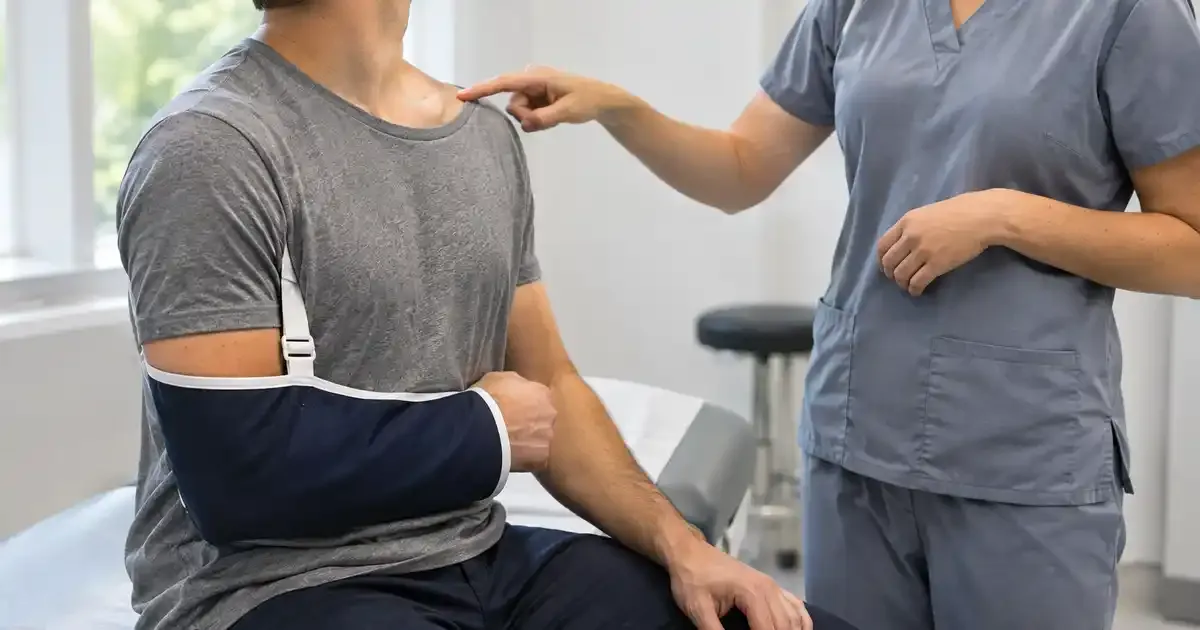
Pain at a single point along the collarbone, bruising, swelling, tenderness, and discomfort with arm movement can all occur with a fracture. A shoulder that seems lower than the other side, a visible bump, grinding with movement, or difficulty lifting the arm also need an examination. These signs do not confirm a fracture on their own: injuries to the shoulder joint, ribs, or soft tissues can feel similar.
When to seek same-day care
Arrange a same-day orthopedic evaluation after a fall or impact when collarbone pain is significant, the area is swollen or misshapen, or using the arm is painful. Prompt assessment is especially helpful for a new deformity, pain that is not improving, or a high-energy mechanism such as a vehicle crash or a substantial fall.
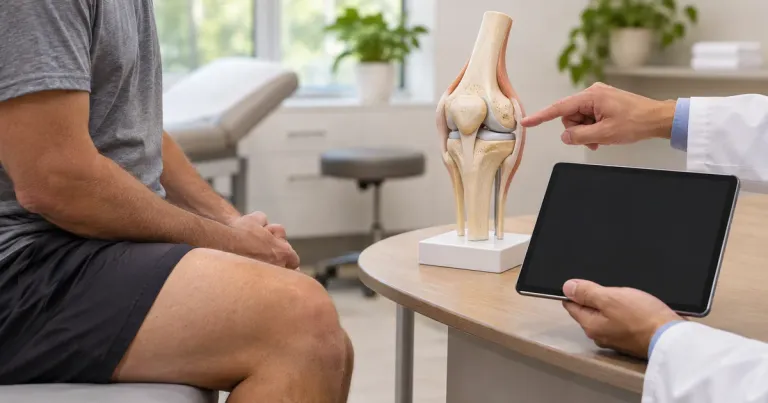
At Wiki Wiki Orthopedics, on-site X-rays can help identify a clavicle fracture and show its location and alignment. X-rays also help the clinician decide whether a sling, other support, follow-up imaging, or a surgical consultation may be appropriate. A normal first X-ray does not always end the evaluation if symptoms and examination still suggest an important injury.
When the ER or 911 is the safer choice
Some collarbone injuries need emergency care rather than a routine urgent-care visit. Call 911 or go to the emergency department if any of the following is present:
- Trouble breathing, chest pain, fainting, or a significant head, neck, or spine injury after the fall.
- Bone pushing through the skin, an open wound over the injury, or bleeding that will not stop.
- Fingers that are pale, blue, cold, very weak, or difficult to move.
- New numbness or tingling that is severe or worsening in the arm or hand.
- A crash or fall so serious that moving the person safely is difficult.
Do not try to straighten a visible bump or push bone back into place. Keep the arm supported in the most comfortable position and avoid lifting, pushing, or pulling with it. If an ambulance is needed, let emergency personnel guide immobilization and transport.
What happens at an evaluation
The visit begins with the story of the injury and an exam of the collarbone, shoulder, arm, hand sensation, pulse, and movement. Imaging is commonly part of the initial workup for acute shoulder-region trauma. The goal is not simply to label an injury; it is to understand whether the bone is broken, whether it is aligned, and whether there are signs of another injury that changes the care plan.
If a fracture is present, treatment depends on the exact location, amount of displacement, skin condition, activity demands, and related injuries. Many collarbone fractures are managed with a sling and follow-up, while others need closer orthopedic assessment and may be considered for surgical fixation. The right option is individual; an X-ray alone is not a complete treatment decision. Read more about fracture care and what protection, imaging, and follow-up can involve.
Protecting the area before you are seen
Avoid repeatedly checking shoulder motion to see whether it “loosens up.” That can increase pain and may aggravate an unstable injury. A simple sling can support the arm while you arrange care, but it should not delay evaluation of severe symptoms. Remove rings from the injured-side hand if swelling is developing. Use a cloth barrier between an ice pack and the skin, and follow the directions on any nonprescription pain medicine you choose; some people need individualized advice because of other conditions or medicines.
Do not drive yourself if pain, injury severity, or medication makes driving unsafe. Have someone bring you or use emergency transport when the warning signs above apply.
Recovery starts with the right diagnosis
Recovery time and activity restrictions vary. The location and alignment of the fracture, your age, your job or sport, and the rest of the shoulder examination all matter. Do not return to contact sports, surfing, heavy lifting, or overhead work just because pain has improved. Your treating clinician can tell you when motion, strengthening, work tasks, and sport can be progressed safely.
For stable collarbone pain after a fall or impact, request an appointment with Wiki Wiki Orthopedics on Oʻahu or call (808) 439-6201 for an evaluation. For an open injury, breathing trouble, hand color change, major trauma, or other emergency signs, call 911 or go to the nearest emergency department.
Sources
- MedlinePlus: Broken collarbone—aftercare, National Library of Medicine, 2024.
- MedlinePlus: Broken bone, National Library of Medicine.
- American College of Radiology: Acute shoulder pain, 2024.