A fall, a collision in a game, or a hard wipeout can leave a shoulder looking or feeling out of place. The pain can be intense, and the arm may hang differently from the other side. A shoulder dislocation is not an injury to “walk off” or try to fix at home. If you think a shoulder has come out of its socket, the safest next step is prompt evaluation in an emergency department.
What a shoulder dislocation can look like
The ball of the upper arm normally sits in the shoulder socket. In a dislocation, it is forced out of that joint. Most shoulder dislocations move forward, but the direction and related injuries need an examination and imaging to determine.
After a fall or sports injury, possible signs include severe shoulder pain, swelling or bruising, a visible change in the shoulder’s contour, trouble moving the arm, or an arm held tightly against the body. Some people also notice numbness, tingling, or weakness in the arm or hand. A shoulder can partly slip out and return to position on its own; that is called a subluxation, and it still deserves medical assessment after an injury.
It is not always possible to tell a dislocation from a shoulder fracture or a serious soft-tissue injury just by looking. That is one reason prompt care matters.
Do not try to pop it back in
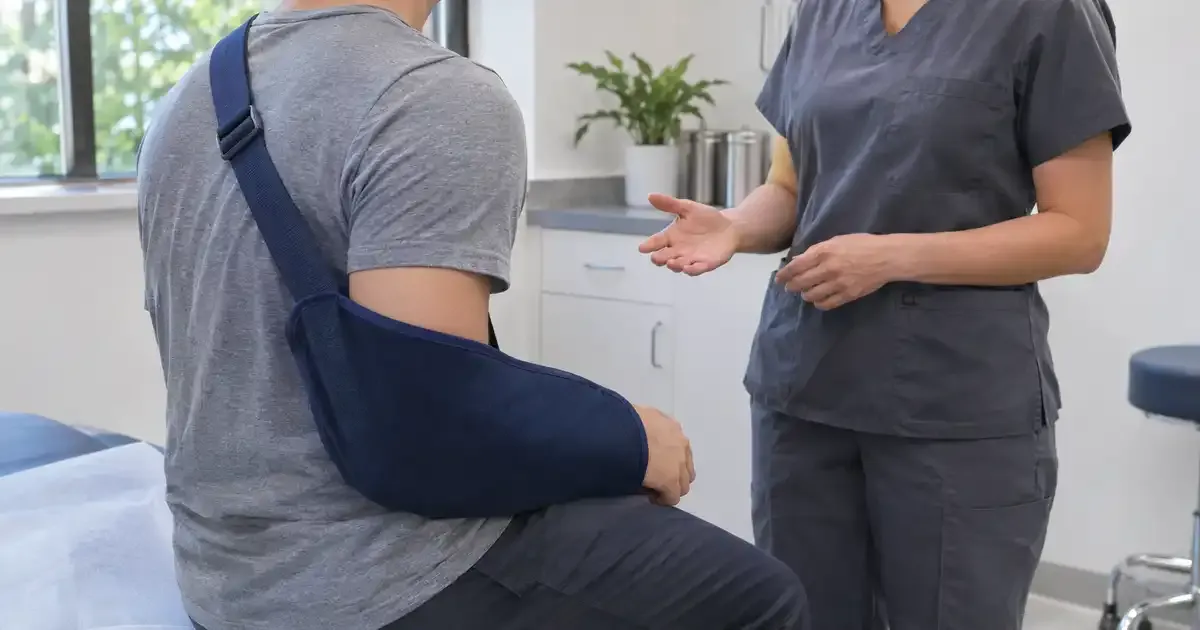
Do not pull on the arm, force the shoulder into position, or ask a friend to “put it back.” Trying to reduce a dislocation without an examination can worsen an associated fracture or injure nerves and blood vessels. Avoid testing the shoulder’s range of motion. Support the arm in the position that is most comfortable, such as with a sling or a folded towel, and arrange emergency evaluation.
If there is an open wound, do not push on protruding bone or tissue. Cover the area loosely with a clean dressing if available and seek emergency help.
Emergency department or 911?
A suspected shoulder dislocation should be evaluated in an emergency department, where a team can check circulation and nerve function, obtain imaging, provide pain control, and reduce the joint safely if needed. This is different from a mild ache after activity or a chronic shoulder problem that can be scheduled for a clinic visit.
Call 911 rather than driving if the person has a cold, pale, or blue hand; uncontrolled bleeding; new severe numbness or weakness; a concerning head, neck, chest, or breathing symptom; or cannot be moved safely after a significant fall or crash. When in doubt after a high-energy injury, emergency services can help determine the safest transport.
What happens during the evaluation
Clinicians start by asking how the injury happened and checking the shoulder, arm, pulse, sensation, and hand movement. X-rays are commonly the first imaging study for acute shoulder trauma. They help show whether the joint is dislocated and whether there is a bone injury. Learn more about X-rays and advanced imaging used in orthopedic care.
If a dislocation is confirmed, the emergency team can use medication and appropriate techniques to guide the joint back into place. A repeat exam and often repeat X-rays help confirm the position afterward. Depending on the injury, further imaging or follow-up may be needed to assess the labrum, rotator cuff, nerves, or a fracture.
The first days after a reduction
Many people leave with a sling and specific instructions about comfort, activity, and follow-up. The plan is individual: age, activity demands, a first versus repeat dislocation, and associated injuries all matter. Do not return to surfing, contact sports, heavy lifting, or overhead activity until the treating clinician says it is safe.
Follow-up is important even when the shoulder feels much better after reduction. Recurrent instability, stiffness, weakness, and associated injuries can affect recovery. A clinician can review imaging, examine the shoulder as pain improves, and discuss rehabilitation or specialist care when appropriate. For non-emergency follow-up after emergency treatment, Wiki Wiki Orthopedics can help evaluate the recovery plan on Oʻahu. Request an appointment or call (808) 439-6201.
Bottom line
An out-of-place shoulder after a fall or sports injury needs urgent attention, not a home reduction. Keep the arm supported, avoid unnecessary movement, and go to an emergency department for a suspected dislocation. Call 911 for circulation changes, major trauma, or other emergency warning signs.