If you fall, miss a step, or land from a jump and suddenly cannot straighten your knee, treat that as more than a routine sore knee. One possible cause is a tear of the quadriceps tendon, the strong tendon just above the kneecap that helps you straighten the knee and lift the leg. A kneecap fracture, patellar tendon injury, or other serious knee injury can cause similar trouble. An in-person exam is the safest way to tell the difference.
Call 911 or go to an emergency department for an open wound, uncontrolled bleeding, a clearly misshapen knee or leg, a cold or pale foot, new numbness, severe pain after a high-energy injury, or symptoms suggesting injury beyond the knee. Do not drive yourself if you may have a serious injury.
Why straightening the knee matters
The quadriceps muscles on the front of the thigh connect to the top of the kneecap through the quadriceps tendon. Below the kneecap, the patellar tendon continues to the shinbone. Together, these structures form the knee's extensor mechanism: the system that lets you straighten the knee, rise from a chair, climb stairs, and keep the knee from buckling while walking.
A quadriceps tendon can tear when a bent knee is suddenly loaded, such as during a stumble, fall, or forceful jump landing. The injury can occur in an active person, but risk may be higher with age or with some medical conditions and medicines. A person does not need to diagnose the cause at home. What matters is the new loss of function after an injury.
Signs that need same-day orthopedic evaluation
Arrange same-day evaluation after a fall, jump, or direct blow if you have any of these symptoms:
- You cannot actively straighten the knee or lift the whole leg straight while lying down.
- The knee buckles when you try to stand or walk.
- There is rapid swelling, substantial bruising, or tenderness above or below the kneecap.
- You felt a pop or tearing sensation and then lost strength.
- You notice a new indentation above the kneecap or the kneecap seems in an unusual position.
- You cannot take four steps normally because of pain or weakness.
These signs do not confirm a quadriceps tendon tear. A fracture, patellar tendon injury, severe sprain, or other problem can look similar at first. Do not repeatedly test the knee, force it straight, or ask someone to pull on the leg to see whether it works. That can increase pain and may aggravate an injury.
What to do before you are seen
Protect the knee from another fall. Avoid running, jumping, squatting, stairs when possible, and driving if you cannot control the leg safely. Limit weight-bearing if the knee feels unstable or sharply painful; use assistance if it is available. A wrapped cold pack for short intervals and elevation may help with swelling. Keep a layer between ice and skin.
If you use a compression wrap, it should be comfortably snug, not tight. Loosen it if the toes become numb, pale, cold, or increasingly painful. Use pain medicine only if it is safe for you and according to the label or advice from a clinician. If you take a blood thinner, have kidney disease, a history of stomach ulcer or gastrointestinal bleeding, are pregnant, or are unsure what is safe, ask a clinician or pharmacist before taking an anti-inflammatory medicine.
What happens at the visit
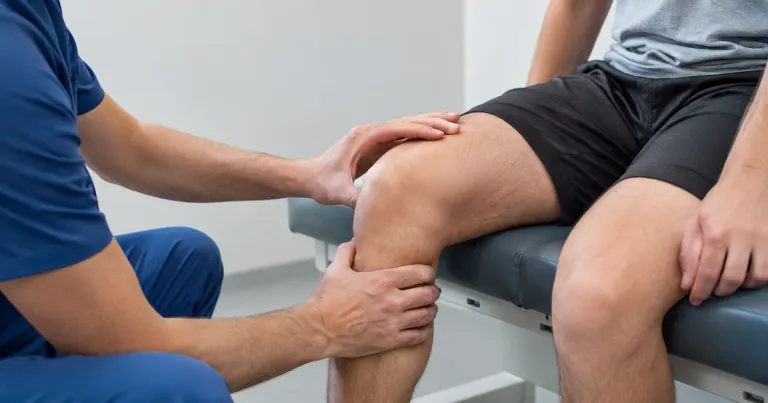
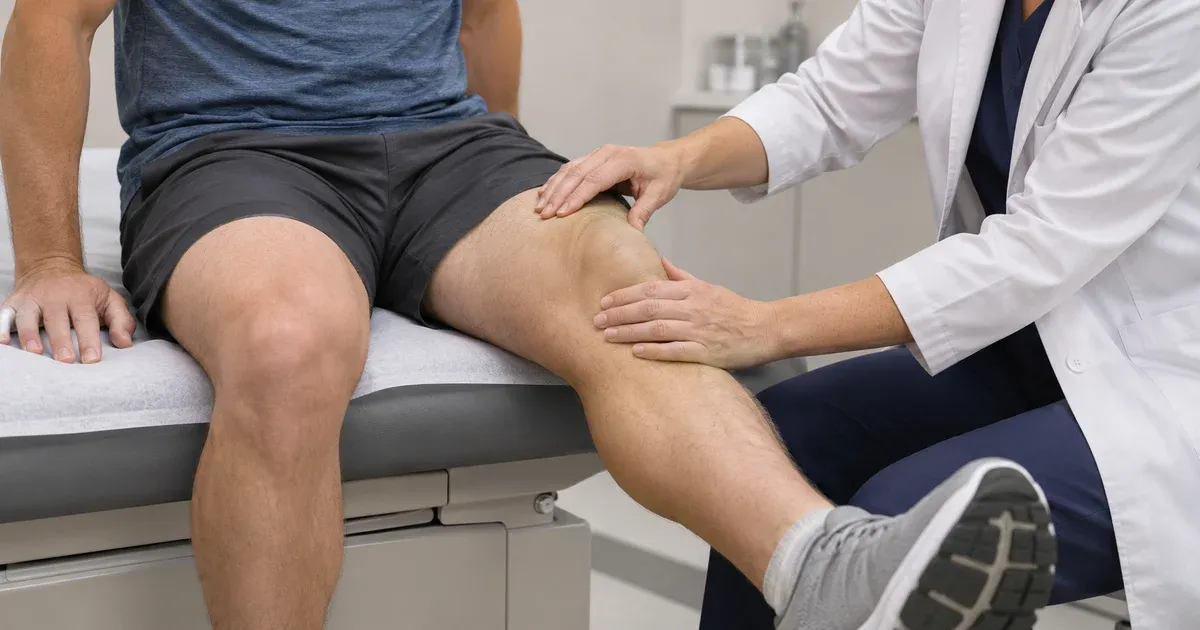
The clinician will ask how the injury happened and examine swelling, tenderness, range of motion, circulation, sensation, and your ability to activate the extensor mechanism. They may compare the injured knee with the other side. This is important because swelling alone can make the knee feel weak, while an extensor mechanism injury can create a true loss of active extension.
Knee X-rays are often an appropriate first test after acute knee trauma when there is focal tenderness, swelling in the joint, or inability to bear weight. X-rays can show a fracture, a piece of bone pulled by a tendon, or abnormal kneecap position. They do not show a tendon tear directly. When the examination suggests a tendon or other soft-tissue injury, ultrasound or MRI may be considered to clarify the diagnosis and guide treatment.
The right plan depends on whether the tendon is strained, partly torn, or completely torn, as well as whether there is a fracture or another injured structure. A complete tear that prevents active knee extension is commonly treated surgically; some partial tears and other injuries may be managed with protection, a brace when prescribed, and rehabilitation. The timing and details are individual, so prompt assessment matters.
Urgent care or emergency department?
For a stable injury without emergency warning signs, orthopedic urgent care is a reasonable place to start when you cannot straighten the knee, cannot walk normally, or have marked swelling after a fall or jump. Wiki Wiki Orthopedics can evaluate acute knee injuries and obtain on-site X-rays when appropriate.
Choose emergency care for a deformed joint, an open injury, signs of poor circulation or nerve problems in the foot, uncontrolled pain, a high-energy crash or fall, or concern for head, neck, chest, or abdominal injury. If you are unsure how serious the injury is, choose the safer level of care.
The next step
Do not wait for a knee that will not actively straighten to simply improve with rest. Protect it, avoid further loading, and arrange an evaluation the same day. The knee care page explains other common knee problems, but a new loss of extension after trauma deserves a focused examination.
To request an evaluation, contact Wiki Wiki Orthopedics or call (808) 439-6201.
Sources
- Extensor apparatus of the knee: clinical outcomes after complete quadriceps tendon ruptures and the importance of early repair, PubMed, U.S. National Library of Medicine, 2025.
- ACR Appropriateness Criteria: Acute Trauma to the Knee, American College of Radiology, 2020.
- Kneecap fracture—aftercare, MedlinePlus, U.S. National Library of Medicine, accessed 2026.