A bent knee that strikes a dashboard in a crash, takes a hard hit during a game, or lands directly on the ground can injure more than the skin and muscles around it. One possible injury is a tear or stretch of the posterior cruciate ligament (PCL), a strong ligament deep inside the knee. A direct impact can also cause a kneecap, upper-shin, or other fracture. You cannot sort that out reliably at home, especially after a vehicle collision.
If the injury happened in a crash, start with the overall picture. Severe pain, a visibly deformed leg, a cold or pale foot, numbness, an open wound, uncontrolled bleeding, new shortness of breath, chest pain, confusion, or concern for head, neck, chest, or abdominal injury calls for 911 or an emergency department. Do not drive yourself if you may have a serious injury.
Why a blow to a bent knee can injure the PCL
The PCL runs from the thighbone to the shinbone inside the knee and helps keep the shinbone from moving too far backward. A classic mechanism is the upper shin being pushed backward while the knee is bent: for example, when the knee strikes a dashboard. Falling directly onto a bent knee in football, rugby, surfing, or another contact activity can create a similar force. A forceful twist or blow may also injure the PCL along with the meniscus, the collateral ligaments, cartilage, or bone.
Not every sore knee after a bump is a ligament tear. Bruising of the front of the knee, a strain, or a fracture can cause similar early symptoms. The mechanism of injury, where the tenderness is, how the knee moves, and whether there is swelling or instability all help guide the next step. That is why an in-person examination matters after a significant impact.
Symptoms worth getting checked promptly
Pain and swelling may begin right away or become more noticeable over the next several hours. Some people describe aching in the back of the knee, stiffness, or a sense that the knee is not dependable when walking downhill, going down stairs, stopping suddenly, or carrying weight. Others mainly notice bruising at the front of the shin or trouble fully bending or straightening the knee.
Arrange same-day orthopedic urgent-care evaluation when you have any of the following after an impact:
- You cannot take four steps normally because of pain or instability.
- The knee is rapidly swelling, very tender, locked, or difficult to straighten.
- You have focal pain over the kneecap, upper shin, or joint line.
- The knee feels as though it buckles, shifts, or gives way.
- Pain or swelling is not settling with basic protection after a lesser injury.
These findings do not prove a PCL tear, but they are good reasons to check for a fracture or a more significant soft-tissue injury. Avoid trying to test ligament looseness yourself or having a friend force the knee into position; that can add pain and may worsen an injury.
What happens at the first visit
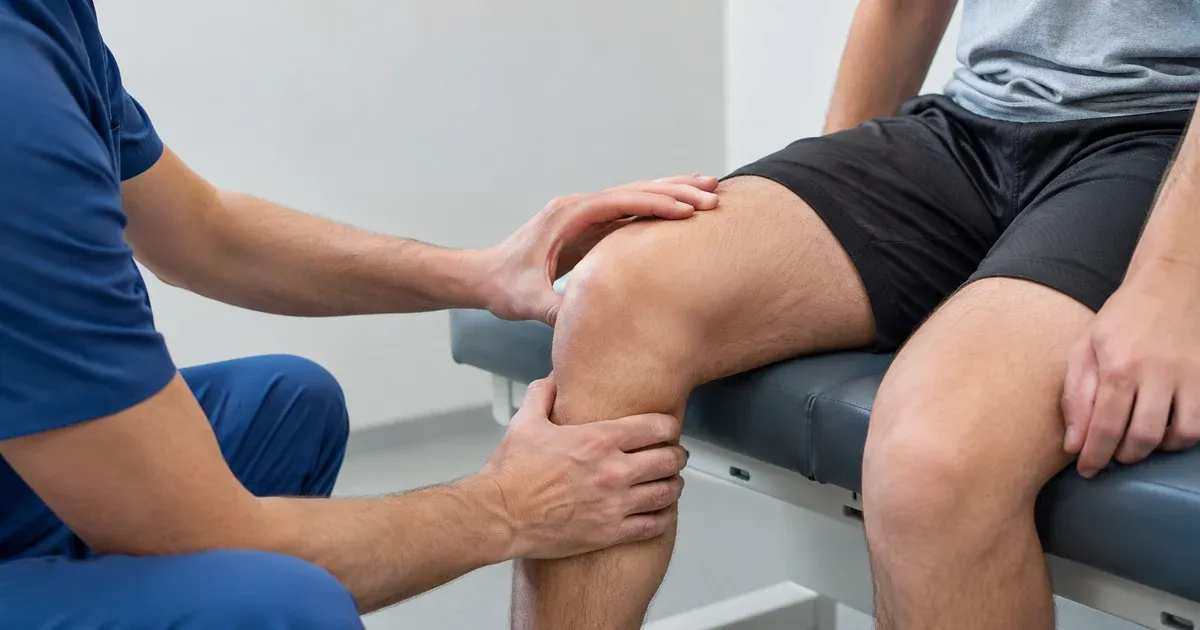
At an orthopedic visit, the clinician will ask how the injury happened and examine circulation, sensation, range of motion, swelling, and knee stability. Comparison with the other knee can be useful. On-site knee X-rays can check for many fractures and alignment problems. In acute knee trauma with focal tenderness, an effusion, or inability to bear weight, X-rays are commonly an appropriate first imaging step.
An X-ray does not show a PCL tear directly. If the exam suggests a ligament, meniscus, or cartilage injury and X-rays do not explain the symptoms, MRI may be considered to assess those soft tissues. The goal is not to order every test immediately; it is to rule out urgent problems and choose the imaging that answers the clinical question.
What to do while you are waiting to be seen
Until you are evaluated, protect the knee from another fall or impact. Do not return to contact sports, running, jumping, or pivoting just because the pain improves for a few minutes. If walking makes the knee buckle or is sharply painful, limit weight-bearing and use assistance if you have it. Elevation and a wrapped cold pack for short intervals may help with comfort and swelling; keep a barrier between ice and skin. A simple compression wrap can feel supportive, but loosen it if toes become numb, pale, cold, or increasingly painful.
Use only pain medicine that is safe for you and follow the label or your clinician's advice. If you take a blood thinner, have kidney disease, a history of ulcer or gastrointestinal bleeding, are pregnant, or have medication questions, ask a clinician or pharmacist before choosing an anti-inflammatory medicine. Do not use a brace as a substitute for an evaluation after a major impact.
Why the diagnosis matters
Some isolated PCL injuries can be managed without surgery using a planned period of protection, appropriate bracing when prescribed, and rehabilitation focused on restoring motion and strength. Other injuries need a different plan because they occur with fractures, other torn ligaments, a dislocation, or persistent instability. The treatment decision depends on the injury pattern, exam, imaging, day-to-day demands, and your recovery goals—not on a single symptom or online test.
The knee care page explains how PCL injuries fit among other knee problems, including meniscus tears, patellar injuries, and fractures. Getting a clear diagnosis early can help you protect the knee while the next steps are decided.
Get the right level of care
After a high-energy collision or a possible knee dislocation, emergency evaluation is the safer choice, particularly with a misshapen knee, severe swelling, an inability to bear weight, or any change in the foot's color, temperature, feeling, or pulse. For a stable knee injury without those emergency signs, Wiki Wiki Orthopedics can evaluate the injury and obtain knee X-rays during your visit.
To request an evaluation, contact Wiki Wiki Orthopedics or call (808) 439-6201.
Sources
- Posterior Cruciate Ligament Injuries, American Academy of Orthopaedic Surgeons, accessed 2026.
- Posterior cruciate ligament (PCL) injury—aftercare, MedlinePlus, U.S. National Library of Medicine, accessed 2026.
- ACR Appropriateness Criteria: Acute Trauma to the Knee, American College of Radiology, 2020.