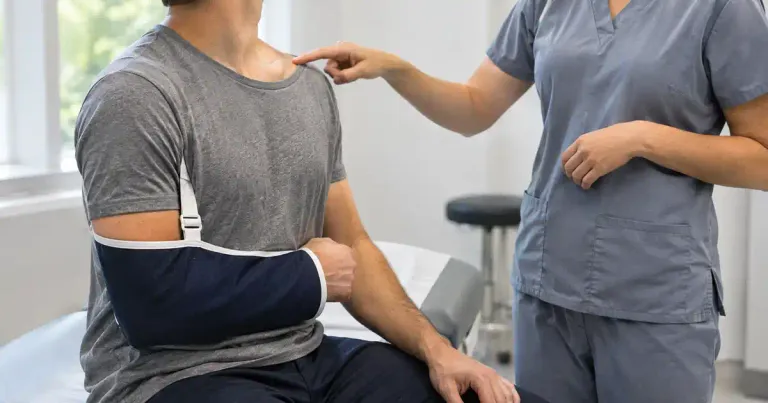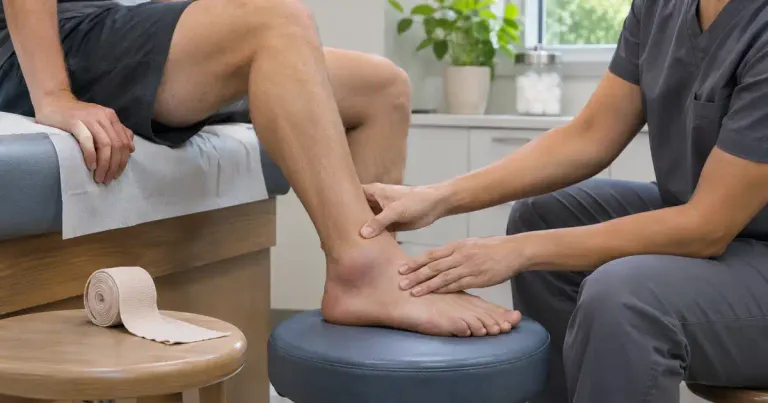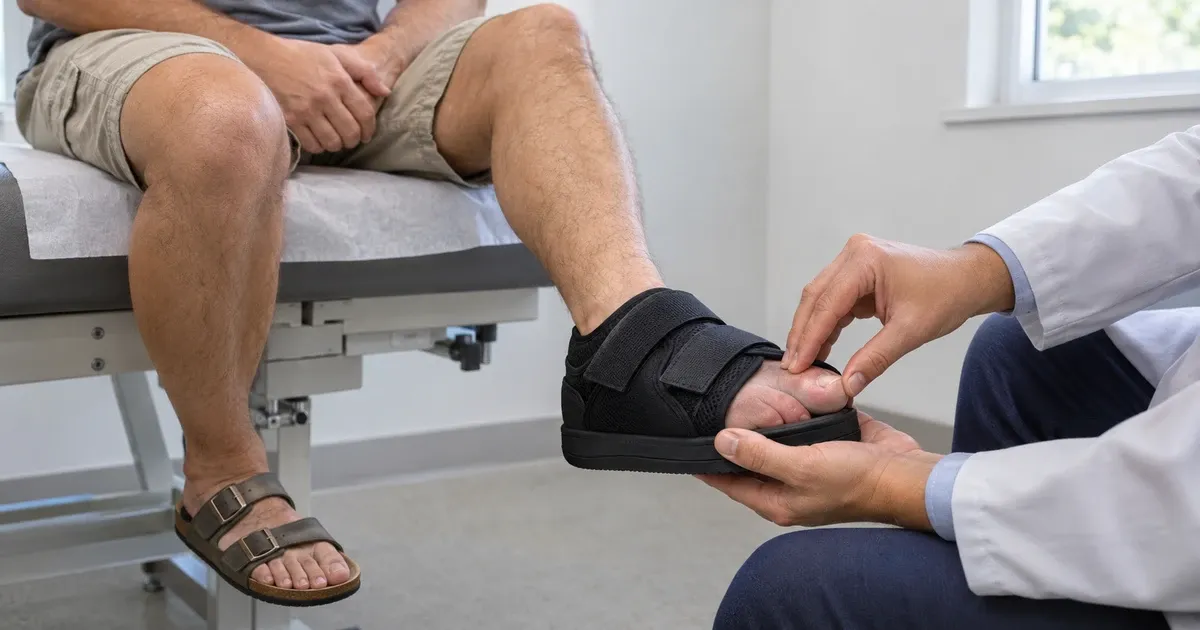
A hard stub against furniture, a board on a worksite, or a dropped object can leave a toe throbbing, swollen, and difficult to fit into a shoe. It may be a bruise, sprain, nail injury, or a fracture of a toe or nearby forefoot bone. Those injuries can feel alike at first. A stable injury can often be assessed with a same-day orthopedic visit and X-ray, while an open wound, a badly misshapen toe, or changes in circulation need more urgent care.
Why a toe injury can be more than a bruise
Each toe contains small bones called phalanges. The big toe has two; the other toes usually have three. The long metatarsal bones sit just behind them in the forefoot. A direct blow can fracture a toe, crush soft tissues, injure the nail, or affect a metatarsal. A sideways twist can also injure the joint or bone.
Pain and swelling alone cannot tell which structure is injured. Bruising, tenderness at one spot, pain when putting weight through the foot, or a toe that looks rotated, shortened, or crooked can occur with a fracture. A damaged nail or a dark collection of blood beneath it can add to the pain after something lands on the toe. Do not assume that being able to walk rules out a fracture, and do not try to pull a crooked toe straight at home.
The big toe deserves particular attention. It helps with balance and push-off during walking, so an injury there can affect how the foot works. A clinician also needs to distinguish an isolated toe injury from a more extensive forefoot injury, especially after a crush mechanism or a fall.
When to arrange a same-day X-ray
Arrange a same-day evaluation when toe or forefoot pain is substantial, walking is difficult, swelling or bruising is increasing, or the toe does not look normal after the injury. An X-ray is useful when an examination raises concern for a fracture, alignment problem, joint involvement, or an injury extending into the forefoot. The American College of Radiology considers foot radiographs usually appropriate for acute toe-region or forefoot trauma that is not fully addressed by the Ottawa foot rules.[^1]
At Wiki Wiki Orthopedics, on-site X-rays can be taken during a visit for foot injuries. The clinician combines the images with the mechanism of injury, skin and nail examination, alignment, sensation, circulation, and ability to move the toes. An X-ray may show a fracture and its alignment, but a normal first image does not always finish the assessment when symptoms or the examination still point to an important injury.
An evaluation is also sensible if pain continues to limit a normal shoe or work activities after the first few days. Stress fractures are different from a single-impact injury, but early stress injuries may not always be visible on the first X-ray; the appropriate follow-up depends on the symptoms and exam.
When the ER or 911 is safer
Some foot injuries need emergency evaluation rather than a routine urgent-care visit. Call 911 or go to the emergency department for:
- A toe or foot that is pale, blue, cold, numb, very weak, or becoming harder to move.
- Bone visible through the skin, a deep open wound, uncontrolled bleeding, or a toe that is severely crushed.
- Major trauma, such as a serious vehicle crash or a fall with possible head, neck, spine, chest, or multiple injuries.
- Severe pain with a rapidly expanding swollen foot, or an injury where it is not safe to move or transport the person.
An open fracture can allow bacteria to reach bone and needs prompt treatment. Do not push exposed bone back into place. Cover an open wound loosely with a clean dressing if available, keep the foot protected, and let emergency personnel direct transport. A person with diabetes, poor circulation, reduced sensation, or immune-system concerns should seek individualized advice promptly after a foot wound or significant injury.
What to do before you are seen
Stop the activity that caused the injury and protect the foot from another impact. Rest with the foot elevated when possible. A cold pack wrapped in a cloth for short intervals can help with comfort and swelling; do not put ice directly on the skin. Remove tight footwear, rings from toe jewelry, or anything that could become constricting as swelling increases.
Avoid forcing the toe to move to “test” it. Do not tape the toe to its neighbor if it is visibly deformed, there is an open wound, the big toe is involved, or the injury has not been assessed; the right support depends on the injury. Similarly, a stiff-soled shoe, boot, splint, or cast should be selected by a clinician after evaluation rather than used to make an unstable injury safe to walk on.
If you choose an over-the-counter pain medicine, follow the label and consider your own medical conditions, allergies, and other medicines. Do not drive if pain, an unsafe shoe, or medicine makes pedal control unreliable. Ask someone to bring you or use emergency transportation when the red flags above apply.
What treatment and recovery may involve
Treatment depends on which bone or joint is injured, whether the pieces are aligned, whether the skin or nail bed is injured, and how much of the forefoot is involved. Many uncomplicated toe fractures are treated without surgery, using protection and activity changes while the bone heals. A toe that is out of alignment may need reduction, and some fractures involving the big toe, a joint surface, several bones, or an unstable forefoot require closer orthopedic review or surgery.
If immobilization is appropriate, splinting and casting may be part of the plan. Follow-up can include repeat examination or X-rays to ensure that alignment and healing remain appropriate. Do not return to running, jumping, ladders, construction work, surfing, or field sports simply because the first sharp pain has improved. The timeline should reflect the specific diagnosis, symptoms, examination, and follow-up imaging when needed.
For more background on fracture assessment and treatment options, see fracture care. For a stable toe or forefoot injury after a stub or dropped object, request an appointment with Wiki Wiki Orthopedics on Oʻahu or call (808) 439-6201. Choose the emergency department or call 911 for an open injury, circulation change, severe crush injury, or other emergency warning sign.
Sources
- Toe and forefoot fractures, American Academy of Orthopaedic Surgeons.
- Broken toe — self-care, MedlinePlus Medical Encyclopedia, reviewed 2026.
- Acute trauma to the foot, American College of Radiology Appropriateness Criteria.
[^1]: American College of Radiology: Acute trauma to the foot.