Heel pain that is sharpest when you take your first steps after waking or sitting can be frustrating. One possible cause is plantar fasciitis, irritation of the thick band of tissue along the bottom of the foot. That familiar pattern is a clue, not a diagnosis: stress injury, nerve irritation, and other problems can also cause heel pain.
What the plantar fascia does
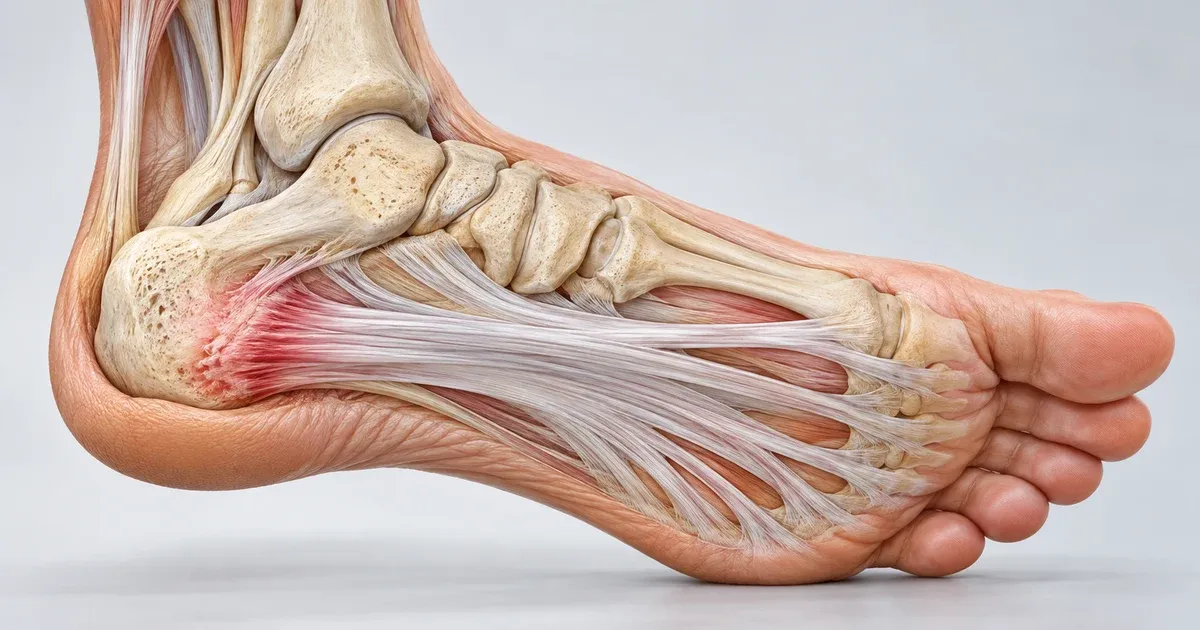
The plantar fascia runs along the sole of the foot from the heel bone toward the toes. It helps support the arch and absorbs forces during standing and walking. Repeated loading can irritate the tissue near its attachment to the heel. The condition is often called plantar fasciitis, although symptoms can involve tissue changes beyond simple inflammation. [1, 2]
People often describe pain under or just in front of the heel. It may be worse during the first few steps after rest, ease somewhat as the foot warms up, and return after prolonged standing, walking, or running. Pressing the bottom of the heel or stretching the sole of the foot may also be uncomfortable. The exact pattern differs among people. [1, 2]
Other causes of heel pain
Heel pain is not always plantar fasciitis. A recent increase in running or walking, a hard landing, or repetitive impact may raise concern for a stress injury. Pain behind the heel can involve the Achilles tendon, while burning, tingling, or numbness may point toward nerve irritation. Inflammatory conditions and other foot problems can also cause pain. [1]
Recent posts have discussed Achilles tendon rupture; this article focuses on pain under the heel after rest. If pain began suddenly during a jump or fall, there is substantial bruising or swelling, or you cannot bear weight, do not assume it is a routine plantar fascia problem. The history and examination help distinguish these possibilities.
When to have it assessed
Arrange an evaluation if heel pain is severe, worsening, keeps returning, limits ordinary activities, or does not improve with reasonable activity changes. Consider prompt assessment if pain follows an injury, you have tingling or loss of feeling, or you have diabetes and a new foot problem. A clinician can help identify whether the pain fits plantar fasciitis or needs a different evaluation. [2]
Seek urgent care for a foot that becomes cold, pale or blue, rapidly increasing swelling, an open wound, or new significant numbness. Get emergency help after a major injury or for severe bleeding or another life-threatening symptom. Do not continue activities that make severe pain worse while waiting for assessment.
What an evaluation may involve
A clinician may ask where the pain is, when it began, how it changes after rest or activity, what footwear and activities are involved, and whether there was a sudden injury. The examination may include checking the heel and arch for tenderness, ankle and foot motion, strength, sensation, and the ability to bear weight. Other areas may be examined if symptoms suggest a different source.
Typical plantar fasciitis can often be assessed through the history and physical examination. X-rays do not show the plantar fascia itself, but may help evaluate bone or look for another cause such as fracture or arthritis. A heel spur can appear on an X-ray and does not by itself prove the cause of pain. Other imaging may be considered when the diagnosis is uncertain. [1]
Wiki Wiki Orthopedics evaluates foot and ankle conditions. The clinic has on-site X-rays; see the X-rays and advanced imaging page for more information. Bring prior images or reports, and describe the activities you need to return to.
What you can try while arranging care
If there was no major injury, consider temporarily reducing running, jumping, or long periods on your feet that sharply increase pain. Supportive shoes with cushioning may be more comfortable than walking barefoot on hard floors or wearing shoes without heel support. A wrapped cold pack can be placed on the sore area for brief periods. Stop if an approach worsens pain or causes skin changes. [2]
Gentle calf and sole-of-foot stretching may help some people, but do not force a stretch through sharp pain. A clinician or physical therapist can show appropriate exercises and discuss whether a heel pad, insole, or night splint is suitable. Ask a clinician or pharmacist about pain medicines that are safe for you, especially if you have other health conditions or take prescription medication.
Treatment depends on the cause and how symptoms affect function. Many cases are managed without surgery, but recovery varies and can take time. If symptoms persist, a clinician can discuss next steps based on the examination rather than relying on a self-diagnosis or a one-size-fits-all timeline. [1, 2]
Sources
- Plantar Fasciitis and Bone Spurs, American Academy of Orthopaedic Surgeons, accessed 2026.
- Plantar fasciitis, NHS, accessed 2026.
For non-emergency heel pain on Oahu, request an appointment or call (808) 439-6201.