Waking with tingling or numbness in your hand can be unsettling, especially when it keeps returning. Carpal tunnel syndrome is one possible cause, but hand numbness can also come from other nerves or conditions. The pattern of symptoms, an examination, and sometimes testing help determine what is happening.
What the carpal tunnel does
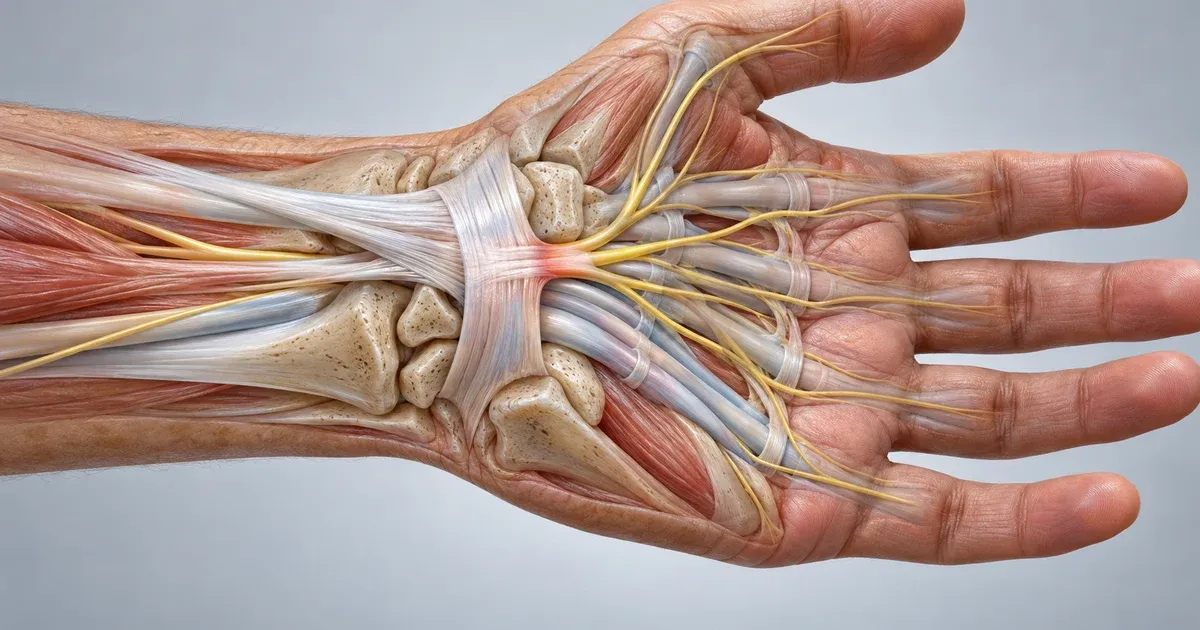
The carpal tunnel is a narrow passage in the palm-side of the wrist. The median nerve and several finger-flexing tendons pass through it. The nerve provides sensation to the thumb, index, middle, and part of the ring finger, and helps control some thumb movement. Pressure on the nerve in this passage can cause carpal tunnel symptoms. [1, 2]
Symptoms often include tingling, numbness, burning, or aching in the thumb-side fingers. They may begin gradually and be more noticeable at night, when the wrist is bent during sleep. Some people notice symptoms while holding a phone, driving, or gripping an object. As symptoms persist, the hand may feel clumsy or weak, and small objects can be harder to hold. These symptoms do not prove that the carpal tunnel is the cause. [1, 2]
Which symptoms fit, and which do not
The median nerve does not supply the little finger. Numbness limited to the little finger, symptoms that begin in the neck, or pain that travels from the neck into the arm may point to a different source. Symptoms can overlap, though, and more than one problem can occur at once. A clinician can help sort out the possibilities. [1]
Notice which fingers are affected, whether one or both hands are involved, when symptoms occur, and what seems to bring them on or relieve them. Mention any dropping of objects, difficulty with buttons, or persistent numbness during the day. If you have diabetes, thyroid disease, a prior wrist injury, or other health conditions, include that history; it may help guide the evaluation. Do not repeatedly provoke symptoms to test your hand.
When to arrange an assessment
Consider an evaluation if numbness keeps waking you, returns during routine activities, persists during the day, or is accompanied by worsening grip or thumb weakness. Ongoing compression can affect nerve function, so persistent symptoms deserve attention even when they are not an emergency. The right timing depends on severity, progression, and the examination.
Seek emergency care for sudden numbness or weakness involving the face, arm, or leg, especially on one side, or when it comes with trouble speaking, confusion, vision changes, severe dizziness, or a sudden severe headache. Those symptoms can indicate a stroke. Also seek urgent care after a serious wrist injury if the hand becomes cold, pale, markedly swollen, or increasingly numb. Call 911 for stroke symptoms or another life-threatening emergency. [3]
What a visit may involve
A clinician will ask about the timing and location of symptoms, what activities affect them, and whether they are progressing. Examination may include checking sensation, thumb strength, hand function, and the neck or elbow when relevant. No single hand position or bedside maneuver confirms carpal tunnel syndrome on its own.
The diagnosis is often based on the history and examination. Nerve testing may be considered when the diagnosis is unclear, symptoms are persistent or severe, or another nerve problem needs to be distinguished. Imaging is not routinely needed to diagnose typical carpal tunnel syndrome, although it may be useful to assess a separate concern. Testing decisions depend on the clinical question. [2, 3]
Wiki Wiki Orthopedics provides orthopedic urgent care and can evaluate hand and wrist concerns. Read more about hand and wrist conditions and the practice's X-rays and advanced imaging. An evaluation can help clarify whether symptoms fit median-nerve compression or suggest another cause.
What may help while you arrange care
Try to avoid sleeping with the wrist tightly curled. A neutral-position wrist splint at night may help some people with mild symptoms, but it may not be appropriate for everyone and it does not replace an assessment when symptoms are persistent or worsening. Avoid a splint that causes more numbness, pain, skin color change, or swelling, and ask a clinician if you are unsure about fit or use. [2, 3]
Treatment depends on the diagnosis and symptom severity. Options may include activity adjustments, a wrist splint, medication or injection in selected situations, or a discussion of surgery when symptoms warrant it. Nonsurgical care can improve symptoms for some people, but ongoing or worsening nerve problems may need another approach. No treatment choice should be made from symptoms alone. [2, 3]
Bring a list of medicines and relevant health conditions, and be ready to describe which fingers are affected and whether the problem is progressing. If symptoms change suddenly or you develop emergency warning signs, seek urgent help rather than waiting for a routine appointment.
Sources
- Carpal Tunnel Syndrome, MedlinePlus, accessed 2026.
- Management of Carpal Tunnel Syndrome: Evidence-Based Clinical Practice Guideline, American Academy of Orthopaedic Surgeons, 2024.
- Carpal tunnel syndrome, NHS, accessed 2026.
For non-emergency hand numbness on Oahu, request an appointment or call (808) 439-6201.