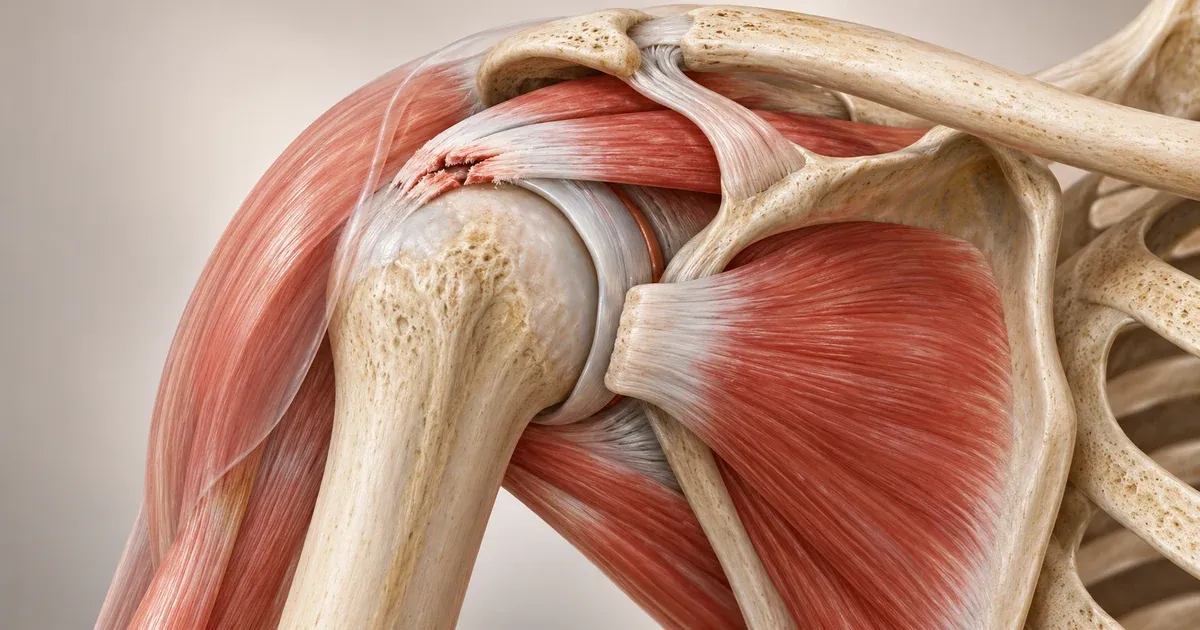
New shoulder pain and weakness after lifting overhead can come from a muscle or tendon injury, including a rotator cuff tear. The rotator cuff is a group of muscles and tendons that helps move and stabilize the shoulder. Symptoms alone cannot confirm a tear, but sudden weakness deserves prompt attention. [1, 2]
Pay attention to what changed
The rotator cuff tendons attach the muscles around the shoulder blade to the upper arm bone. A tear can follow an injury or develop over time. Pain with lifting or lowering the arm, weakness, and pain that disturbs sleep can occur, but shoulder symptoms have several possible causes. A person may also have a fracture, dislocation, bursitis, or another tendon problem. [1]
Think back to the moment symptoms began. Did pain start during a single lift, or build over repeated overhead work? Could you raise the arm beforehand? Is it pain that stops movement, or does the arm feel newly weak even when you try gently? Note where it hurts and whether the pain travels down the arm. These details help a clinician understand the problem; do not repeatedly lift a heavy object to test the shoulder.
Choose care based on the symptoms
Arrange prompt assessment after a sudden injury followed by new weakness, difficulty raising the arm, or persistent pain that interferes with work or sleep. Wiki Wiki Orthopedics evaluates shoulder conditions, including rotator cuff injuries.
Go to the emergency room immediately for a shoulder that looks deformed, severe pain after a fall or major injury, an open wound, or an arm that becomes cold, pale, numb, or loses feeling. Call 911 for severe bleeding, collapse, chest pain, trouble breathing, or a serious injury involving the head, neck, or back. Do not try to force a deformed shoulder back into place. [3, 4]
If there is sudden major weakness or you cannot move your arm, seek urgent in-person advice rather than waiting for a routine appointment. Tell the service how the symptoms started and whether you also fell or struck the shoulder. A request for an appointment is not an emergency service.
What an examination and images can clarify
The clinician will ask about the activity, the onset of pain, prior shoulder symptoms, and what movements have changed. Examination may include checking how far you can move the arm yourself and with assistance, strength, and tenderness. Comparing movement and strength can help distinguish pain-limited motion from weakness, although no single finding establishes the diagnosis. [1]
X-rays do not show a rotator cuff tear, but they can help identify a fracture or other bone and joint changes. Ultrasound or MRI can show soft tissues such as the cuff and may help establish the location and extent of a tear when imaging is appropriate. The choice depends on the examination and what question the scan needs to answer. [1, 2]
Wiki Wiki Orthopedics offers on-site X-rays and referrals for CT or MRI when needed. See the practice's X-rays and advanced imaging page for details. Bring prior images, reports, and discharge paperwork so the team can consider what has already been checked.
Before leaving, ask what diagnosis is most likely, what remains uncertain, which activities to pause, and whether further imaging or follow-up is needed. If you use your arm for overhead work, lifting, paddling, or sports, describe those tasks and ask what restrictions are appropriate while the shoulder is assessed.
Protect the shoulder while you arrange care
Avoid heavy overhead lifting and activities that sharply worsen the pain. Do not start strenuous band exercises, repeated overhead raises, or a borrowed rehabilitation plan before you know what is injured. For pain relief, a cold pack wrapped in cloth may help; avoid placing ice directly on skin. Ask a clinician or pharmacist which medication is safe for you, especially if you have other medical conditions or take prescription medicines. [3, 4]
Avoid keeping the arm completely still for a prolonged period unless a clinician advises a sling or other protection. The right balance of rest and gentle movement depends on the cause and severity. If a support is recommended, ask how to position it and when to remove it. Stop any movement that causes severe pain or new numbness.
Treatment depends on the type of injury
Some rotator cuff problems are managed without surgery, often with activity adjustments and guided exercises. A clinician may also discuss medication or an injection for selected symptoms. A large tear, sudden traumatic tear, ongoing weakness, and a person's health and activity needs can affect the discussion about surgery. Not every tear requires immediate surgery; treatment should match the examination and individual goals. [1, 2]
If you are offered more than one option, ask what each is intended to improve, what risks or limitations matter in your case, and how progress will be reassessed. A gradual return to lifting or sport should follow advice for the specific diagnosis rather than a calendar borrowed from someone else's injury.
Sources
- Rotator cuff tears, American Academy of Orthopaedic Surgeons, accessed 2026.
- Management of Rotator Cuff Injuries: Evidence-Based Clinical Practice Guideline, American Academy of Orthopaedic Surgeons, 2025.
- Shoulder pain, NHS, accessed 2026.
- Shoulder pain, MedlinePlus, accessed 2026.
For non-emergency shoulder pain on Oahu, request an appointment with Wiki Wiki Orthopedics or call (808) 439-6201. Mention any sudden weakness and what activity brought it on.