A fingertip that droops after being struck by a ball may have more than a routine jam. Mallet finger is an injury to the tendon that straightens the last joint of the finger. The tip stays bent because you cannot straighten it normally on your own. Arrange medical assessment rather than repeatedly testing it. [1]
Why the end joint matters
A force that bends the fingertip downward can damage the tendon on its back surface. Sometimes the tendon pulls away a piece of bone as well, creating an avulsion fracture. Pain, swelling, and bruising may accompany the droop, but the change in movement is an important clue. [1]
When seeking care, explain which joint is affected and how the injury happened. Did the finger take a direct hit during volleyball, basketball, or another activity? Was the skin cut? Has the fingertip stayed bent since then? Tell the clinician if someone has already tried to manipulate it or if there is damage around the nail.
Wiki Wiki Orthopedics evaluates hand and wrist injuries, including finger tendon problems. The practice also provides splinting and casting, including finger splints. The appropriate support depends on the examination and any associated bone injury; taping two fingers together is not a substitute for identifying the problem.
Get the right level of care
Seek prompt medical advice for an injured finger that will not straighten. While arranging care, elevate the hand and gently remove any rings if they slide off easily. If a ring is stuck or swelling is increasing, get assistance rather than forcing it over the injury. [3]
Blood under the nail or a detached nail needs immediate attention because it may indicate a nail-bed wound or an open fracture. [1] Do not puncture the nail or attempt to repair the wound yourself.
Go to the emergency room immediately if the finger becomes cold, pale, blue, or numb, if bone is exposed, or if there is a severe deformity or deep open injury. Call 911 for severe uncontrolled bleeding, collapse, or serious accompanying injuries. Keep the injured area supported and do not try to straighten an obviously displaced joint. [4]
If an orthopedic clinic cannot assess you promptly, use urgent care or an emergency department as appropriate to the symptoms. An appointment request is not an emergency service. Describe any changes in circulation, sensation, skin, or nail appearance at the start of the conversation.
What the examination and X-rays can show
The clinician will assess whether you can actively straighten the fingertip and check the injury. X-rays can identify a bone fragment and show whether the joint remains aligned. A substantial fracture or a joint that has shifted may change the treatment, including whether surgery should be considered. [1]
Bring any earlier images, reports, and discharge instructions. Ask what has been diagnosed, whether further review is needed, and who will check progress. Make sure you understand the difference between protection needed now and exercises that may become appropriate later.
Splint fit and consistency are part of treatment
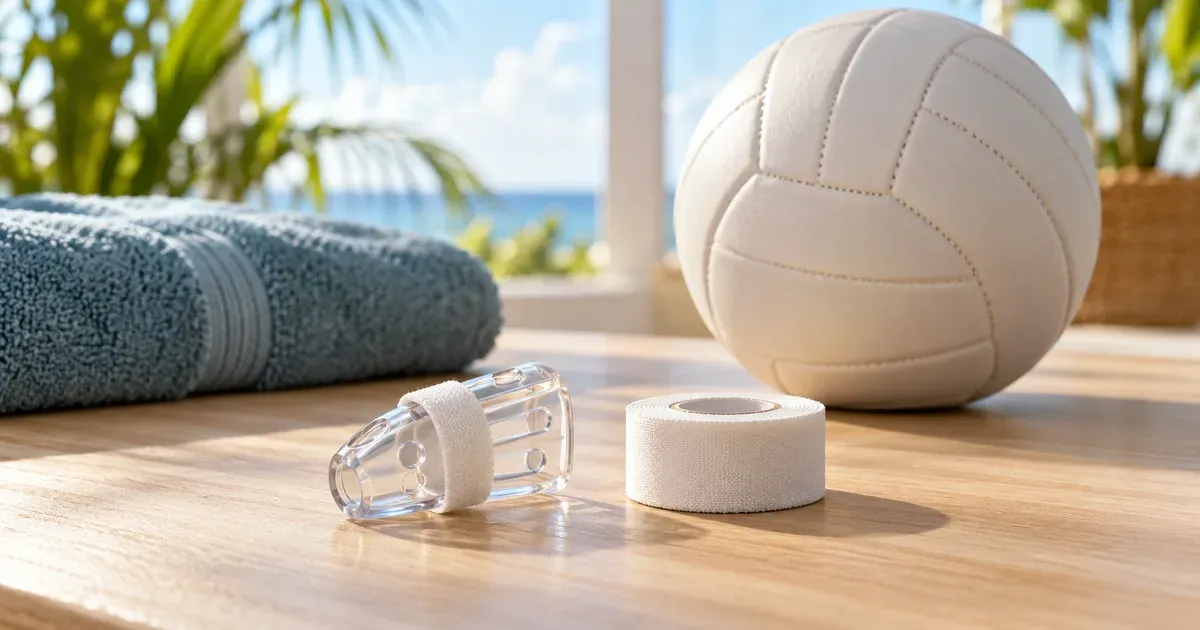
A properly fitted splint holds the injured end joint straight while healing occurs. It should prevent drooping without restricting blood flow or causing numbness. Continuous splinting often lasts several weeks; the precise schedule depends on the injury. Do not shorten it because pain improves or borrow someone else's timetable. [2]
Ask the clinician to demonstrate how to keep the fingertip supported during cleaning. Bending it while the splint is off can disrupt healing and extend treatment. Follow the prescribed instructions about when the splint may be removed, and contact the treating team if it breaks, slips, or no longer fits. [2]
Keep both the finger and splint dry. Wet skin beneath a splint can become sore. Cleaning should follow the demonstrated technique, keeping the injured joint straight throughout. Ask for help if you cannot manage the change safely yourself; do not leave the splint off simply to let the finger rest. [3]
Plan work, sport, and follow-up
Discuss your actual daily tasks before leaving: food preparation, gloves at work, handwashing, typing, lifting, paddling, or ball sports. Ask how to protect the splint during those activities and whether temporary changes are needed. A practical plan is easier to follow than guessing each time the hand gets wet or equipment catches on the finger.
The NHS advises avoiding sports or exercise involving the hands during recovery. Ask your own treating team when your particular activity is safe and what protection is required. Swelling and tenderness may take months to settle, and some people need time away from work depending on their duties. [3]
Do not stop splinting or begin bending exercises without the planned review. The clinician may need to reassess healing before changing the schedule. Contact the team for increasing pain, new numbness or tingling, or a change in skin color. [2]
Before you leave, confirm the next review and how to reach the team with a splint problem. Ask what to do if the fingertip accidentally bends during cleaning, and whether you need an earlier assessment if the droop returns. These details matter as much as knowing how many weeks the initial treatment may take.
Sources
- Mallet finger, American Academy of Orthopaedic Surgeons, accessed 2026.
- Mallet finger: aftercare, MedlinePlus, accessed 2026.
- Mallet finger, NHS, accessed 2026.
- Broken bone, MedlinePlus, reviewed 2026.
For a non-emergency finger injury on Oahu, request an appointment with Wiki Wiki Orthopedics or call (808) 439-6201. Mention any new fingertip droop or inability to straighten the end joint.