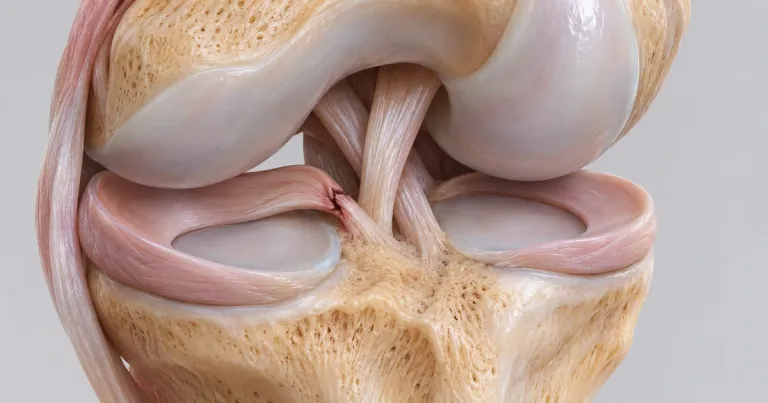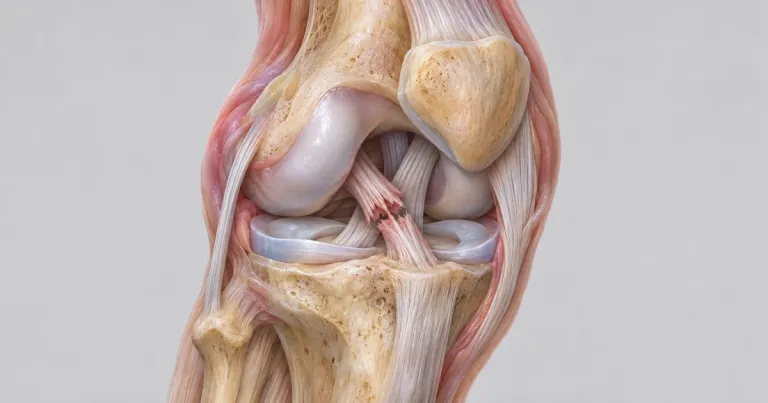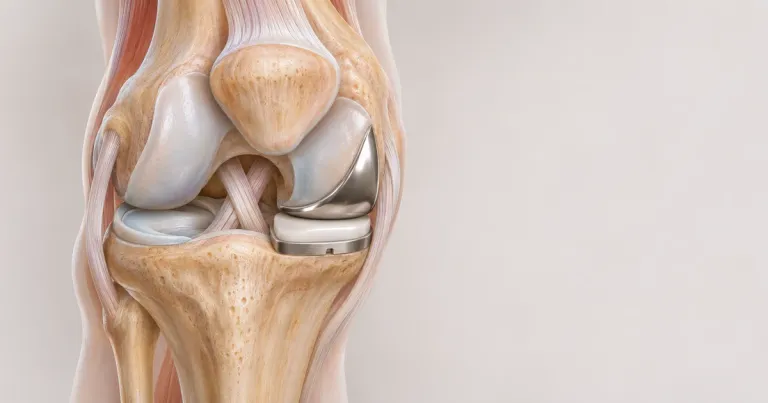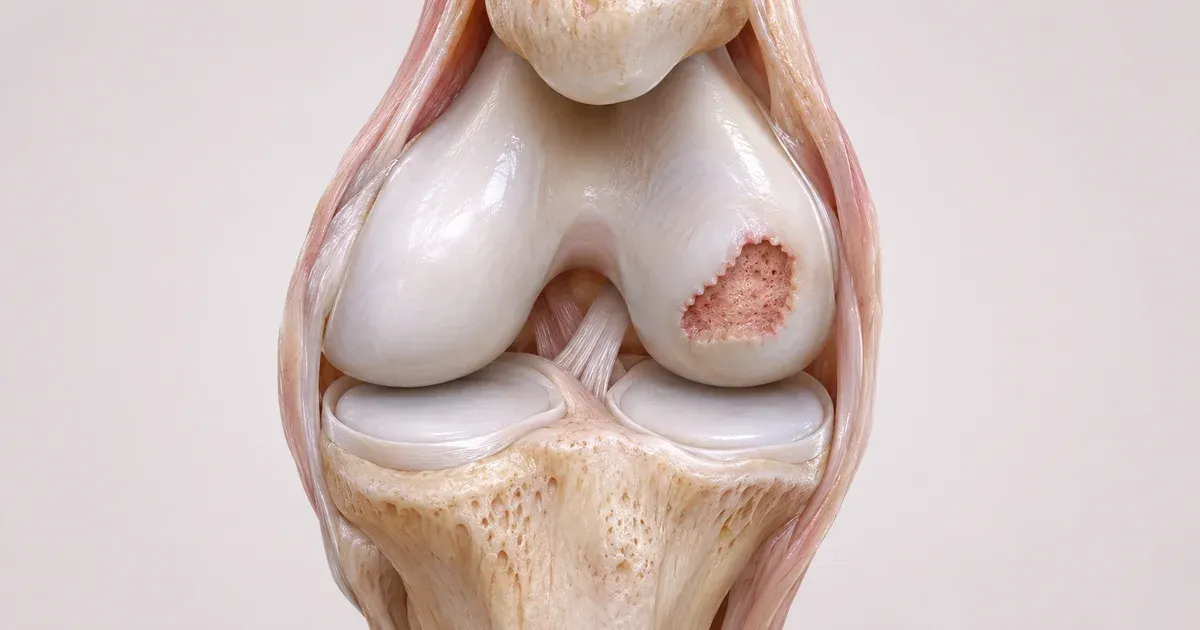
A small, localized area of damaged cartilage inside the knee can cause persistent symptoms even when much of the joint surface is preserved. MACI is one procedure used to repair certain symptomatic, full-thickness cartilage defects in adults, but it is not a general treatment for every kind of knee pain or arthritis. Deciding whether it may fit requires an evaluation of the defect and the rest of the knee. [1, 2]
What is articular cartilage?
Articular cartilage is the smooth tissue covering the ends of bones where they meet in a joint. In the knee, it helps the joint surfaces move against one another. A focal cartilage defect is a localized area of damage. It differs from osteoarthritis, which can involve more widespread changes across a joint. Symptoms such as pain, swelling, or catching do not identify a cartilage defect on their own; meniscus, ligament, bone, and other problems can produce similar symptoms. [2]
Cartilage damage may occur after an injury or develop in a particular area over time. How much it matters depends on its size, depth, location, the bone beneath it, and other features of the knee. An imaging finding also needs to be interpreted in context: not every defect causes symptoms, and the scan alone does not determine treatment. [2]
How is a cartilage defect assessed?
A clinician will ask about when symptoms began, what activities bring them on, prior injuries or procedures, swelling, and how the knee affects daily life. The physical examination may assess motion, tenderness, stability, alignment, and other possible causes of symptoms. X-rays can show bones and joint-space changes. MRI can help assess cartilage and other soft tissues, and may be used to characterize a suspected defect. Additional imaging or tests depend on the examination and the question that needs answering. [2]
The evaluation also considers whether there is arthritis beyond the focal area, damage to the underlying bone, a meniscus or ligament problem, or an alignment issue. These can affect which options are reasonable and may need to be addressed as part of a treatment plan. Bring prior imaging and reports to the visit if available; the clinician can review them alongside your symptoms and examination.
What is MACI?
MACI is an autologous cellularized scaffold product. In broad terms, a small sample of a patient’s cartilage cells is collected during an initial procedure, processed and grown, and later implanted on a collagen membrane into a prepared cartilage defect. The FDA indication is for repair of symptomatic, single or multiple full-thickness knee cartilage defects, with or without bone involvement, in adults. The indication describes a specific type of defect; it does not mean that everyone with knee pain or arthritis is a candidate. [1]
MACI involves staged care and a rehabilitation process after implantation. The timing and restrictions depend on the treatment plan and the individual knee. Before considering it, patients should discuss the steps involved, expected recovery demands, possible complications, alternatives, and how success would be assessed. No treatment can guarantee that symptoms will resolve or that a person will return to a particular activity. [1, 2]
Is MACI right for every cartilage problem?
No. A clinician may discuss MACI or another option only after considering the location and extent of the defect, the condition of surrounding cartilage and bone, symptoms, prior treatment, overall joint health, and personal goals. The FDA labeling lists important contraindications, including severe knee osteoarthritis and certain inflammatory joint conditions; the full prescribing information should be reviewed as part of a clinical discussion. [1]
Other procedures may be considered for some focal defects, while nonsurgical management may be appropriate in other situations. The choice is individualized. It is useful to ask what the imaging shows, whether the defect likely explains your symptoms, which other structures are involved, and why a particular option is being discussed. Ask about what rehabilitation requires and what limitations or risks matter for your work, sports, and daily activities.
A cartilage-restoration discussion is different from a routine knee-arthritis visit. If the main problem is widespread arthritis rather than a focal defect, the evaluation and options may be different. A clear explanation of the diagnosis can help you understand why a treatment is or is not being considered.
Wiki Wiki Orthopedics lists cartilage repair, including MACI, among its surgical services. Learn more about knee conditions, sports-related knee injuries, and X-rays and advanced imaging. Whether a procedure is appropriate depends on an individual assessment.
Sources
- MACI (autologous cultured chondrocytes on porcine collagen membrane), U.S. Food and Drug Administration; see current package insert.
- Articular Cartilage Restoration, American Academy of Orthopaedic Surgeons, OrthoInfo.
- Cartilage Injury in the Knee: Assessment and Treatment Options, Journal of the American Academy of Orthopaedic Surgeons, 2020.
For persistent knee symptoms or a suspected cartilage injury on Oahu, request an appointment or call (808) 439-6201.