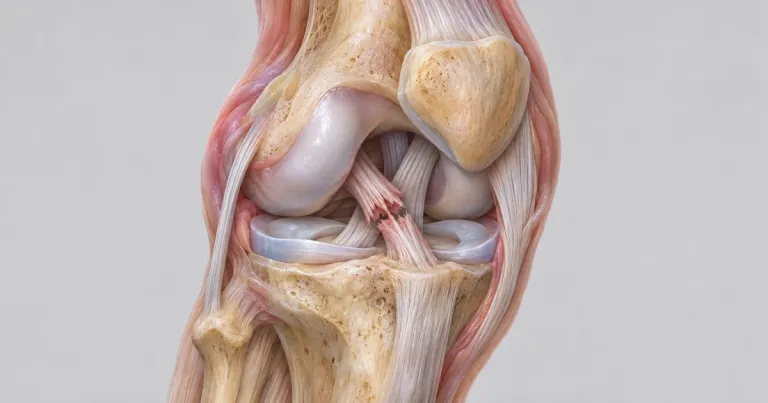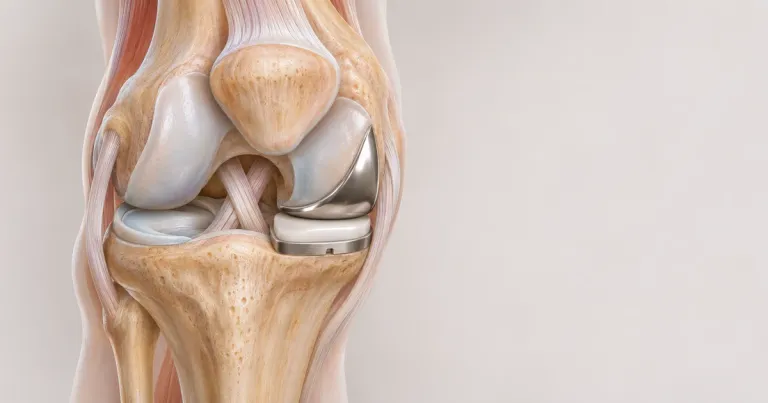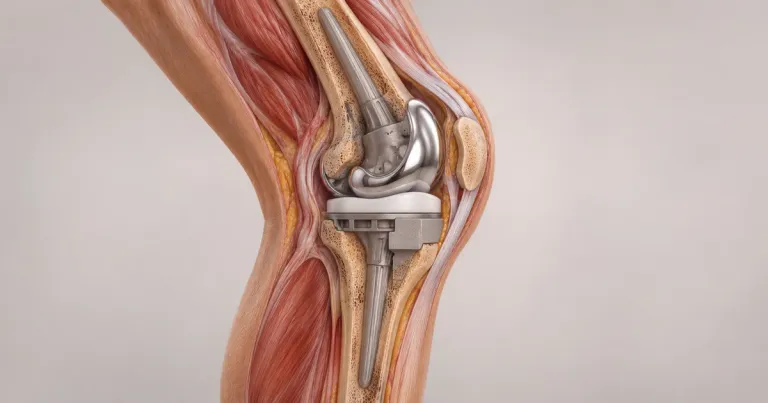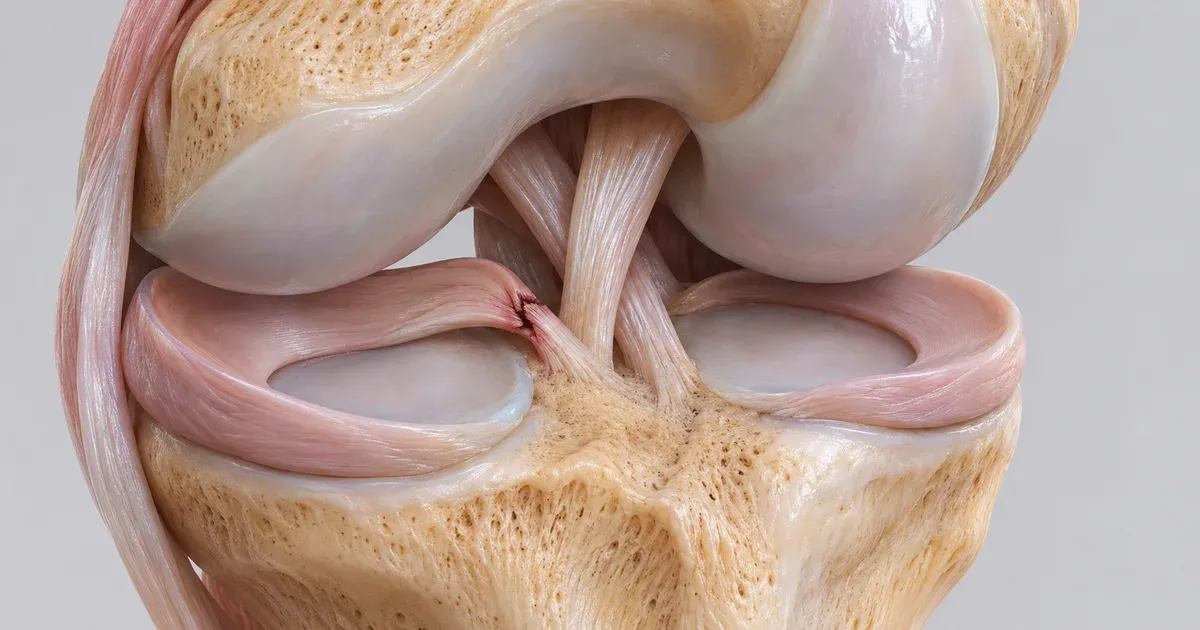
A meniscus root tear is an injury at or very near the point where the meniscus attaches to the shinbone. It is different from many tears through the body of the meniscus because this attachment helps the meniscus spread load across the knee. Knee pain, swelling, or a pop does not identify a root tear by itself; an examination and, when appropriate, imaging are needed. The treatment decision depends on the tear, the condition of the knee, and the person’s goals. [1, 2]
What does the meniscus root do?
The medial and lateral menisci are crescent-shaped pads of fibrocartilage between the thighbone and shinbone. Their roots anchor them to the tibia. With those attachments intact, the menisci help distribute forces through the knee and contribute to joint stability. A root tear can interfere with that function and may allow the meniscus to move away from its usual position, a change often called extrusion. The amount of effect varies, and a scan finding must be interpreted with the rest of the evaluation. [1, 2]
Root tears may occur with a forceful twist or deep bend, or develop in tissue that has become more vulnerable over time. Some people recall a specific event; others notice pain during an ordinary movement. Symptoms can include pain along the joint line or back of the knee, swelling, or difficulty with activities that load the knee. These symptoms overlap with other knee problems, so they cannot confirm a root tear without assessment. [1]
How is a root tear evaluated?
A clinician will ask when symptoms began, what movement brought them on, and whether the knee swells, catches, or limits walking and daily activities. The examination can assess tenderness, motion, swelling, alignment, and other possible sources of pain. A clinician may also look for signs of arthritis or another injury that could affect treatment choices.
X-rays show bones and can help assess joint-space narrowing or other bony changes, but they do not show the meniscus itself. MRI can help evaluate the meniscus, cartilage, ligaments, and other soft tissues. Root tears may be difficult to recognize, and MRI findings should be considered alongside symptoms, examination, and X-rays. The AAOS guideline for acute isolated meniscal injuries specifically excludes meniscal root tears, so its recommendations should not be applied to root tears as if they were the same condition. [1, 3]
An evaluation may also consider whether there are associated injuries and how much cartilage wear or arthritis is present. Those factors can influence whether a repair is technically reasonable and what benefit a patient might expect. If you already have imaging, bring the images and report when you are evaluated; a report alone may not answer every clinical question.
Does every root tear need surgery?
No. A diagnosis does not automatically mean that surgery is required. Treatment discussions can include activity adjustment, rehabilitation, symptom management, and surgery, depending on the situation. A patient’s general health, goals, knee alignment, arthritis severity, tear pattern, and ability to complete postoperative rehabilitation may all matter. The evidence for root-tear management continues to evolve, and published studies do not establish one approach for every patient. [1, 2]
When surgery is considered, a repair aims to reattach the root to its tibial attachment so the meniscus can resume more of its load-sharing role. Repair is not the same as trimming away a damaged portion, called partial meniscectomy. A repair may require a protected recovery with restrictions on weight-bearing or knee motion while healing occurs; the exact plan depends on the procedure and surgeon’s instructions. A person considering repair should understand the rehabilitation demands, risks, alternatives, and possibility that a repair may not heal as hoped. [1]
Repair may not be appropriate for every tear or every knee. More advanced cartilage loss, substantial arthritis, poor tissue quality, alignment issues, other health considerations, or rehabilitation limitations may change the balance of potential benefits and risks. In some cases, nonoperative care or a different procedure may be discussed. These are individualized decisions, not choices that can be made from symptoms or an MRI image alone. [1, 2]
Questions to bring to an appointment
If a root tear has been raised as a possibility, useful questions include: What findings support that diagnosis? Is there arthritis or another injury that changes the plan? Would more imaging help? What are the expected restrictions and rehabilitation if repair is considered? What nonsurgical options are reasonable, and how will we know whether they are helping? Asking how uncertainty in the evidence applies to your own knee can also make the discussion clearer.
Wiki Wiki Orthopedics provides orthopedic evaluation and on-site X-rays. Read about knee care, sports injuries involving the ACL and meniscus, and X-rays and advanced imaging. The practice lists meniscus repair and meniscal debridement among its surgical services; whether a particular treatment is appropriate depends on the individual evaluation.
Sources
- Diagnosis and Treatment Strategies of Meniscus Root Tears: A Scoping Review, Orthopaedic Journal of Sports Medicine, 2024.
- Meniscus Root Tears: State of the Art, Journal of ISAKOS, 2024.
- Clinical Practice Guideline for the Management of Acute Isolated Meniscal Pathology, American Academy of Orthopaedic Surgeons, 2024. The guideline excludes root tears.
For knee pain or a suspected meniscus injury on Oahu, request an appointment or call (808) 439-6201.